Ehiamwen Ivin
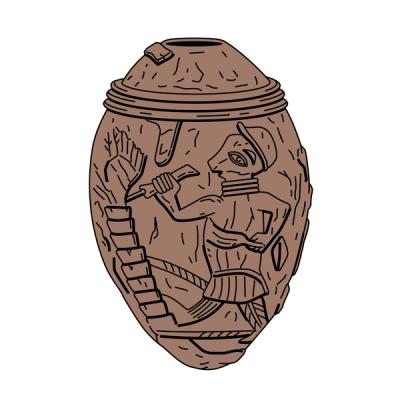
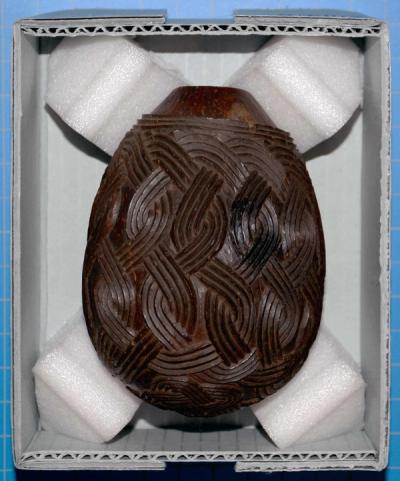
Ivin (carved coconut vessels) served as a medium for carvers who were part of the Emada (Omada, sing. / Emada, pl.) and practised inside the palace. Compared with Igbesanmwan, relatively little is known about this form of craftsmanship.
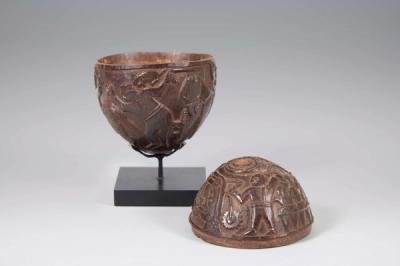
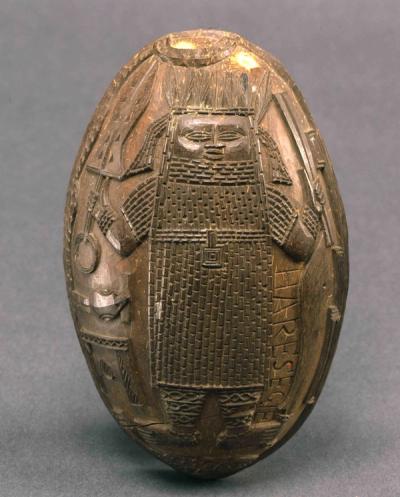
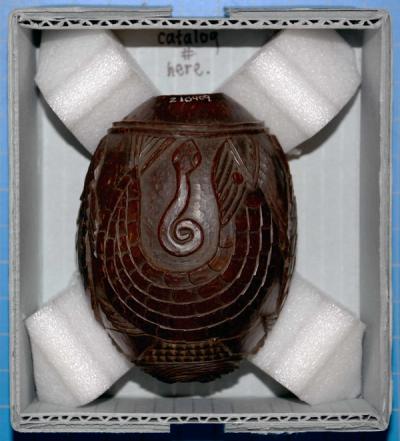
The style of carvings produced by the Emada differed from the more rigid, stylised and ceremonial/ritual carvings of the hereditary Igbesanmwan guild. Emada members learned to carve as part of their training to be palace pages, thus these carvings tend to be more individual and personalised, and were also sold as commercial items (Ezra, 1992, p.253-254 ). In addition to wooden objects, the Emada carved intricate designs into the shells of coconuts. Although the origin of carving by Emada members is not known, the presence of objects clearly carved by them, such as these coconut shells which were part of the loot from Benin City in 1897, confirms that the Emada were carving during the nineteenth century (Ezra, 1992, p.254 ).
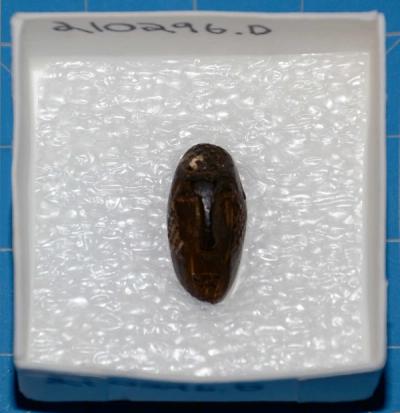
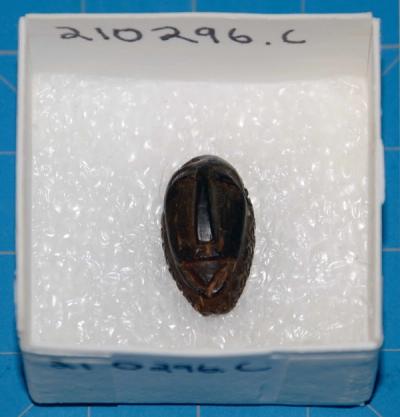
Ivin may have been used for storage or other functions. Some are cut in half, forming a bowl and a lid (Hess, 1984, p.47 ). Others have small openings and lugs carved into the sides to allow them to be suspended, possibly to be used as a kind of flask. In addition to serving as containers, carved coconut vessels were also placed on altars.
Educational Material
Digital Benin collates digital material from institutions, and some of this material is inherently colonial and contains words, terms and phrases that are inaccurate, derogatory and harmful towards African and African diasporic communities. Catalogue transcriptions, book titles, exhibition titles and museum titles may contain harmful terms. We recognise the potential for the material to cause physical and mental distress as well as evoke strong emotions. Owing to the scale of the collection’s data, a process to implement sensitive-content warnings in the displayed data is still incomplete. The material within the catalogue does not represent Digital Benin’s views. Digital Benin maintains a strong anti-colonial, anti-racist position and affirms its support for centring the humanity of historically marginalised and disenfranchised communities. Read more about the background of this statement here