
OBJEKTE_ID
1793434
English designations
Stand
Categories
Altar & Shrine Objects
Location
Johannispl. 5-11, 04103 Leipzig, Germany
Loading...
Stand
Stand

Iconographies

4 annotations
Ubanu'hi / Obanu'hi
Ubanu'hi / Obanu'hi
Inifinity Symbol

The Ubanu'hi (infinity symbol) is a kind of guilloche or interlaced strapwork motif that can be angular or rounded. It was used by Edo artists in the decoration of many Emwin Arhe (royal treasures) and is ubiquitous in Benin royal arts. Ubanu'hi is a shortened form of “uba no Ọba ya de agbon ke ehimwin yi”, which means “the rope with which the Ọba ties the heaven and earth together” (pers. comm. Chief John Igbineweka Inneh n’Igbesawman, 2022). Similarly, Paula Ben-Amos Girshick (in Plankensteiner 2007, pp. 339, 341) described this as “Ọba n’iri agbon”, or the “rope of the world” pattern.

According to Ọbabanmu Ineh (in Blackmun 1984, p. 51), the use of this motif indicates that objects were carved by members of the Igbesanmwan. However, the motif is found on all types of Emwin Arhe (royal treasures), not only those made of ivory or wood. On the flanges of the Ama (relief plaques) alone, Kathryn Gunsch (2018, pp. 75–77) identified three different versions of the Ubanu'hi and, through her analysis of over 850 plaques, found that these different Ubanu'hi forms align with other characteristics, such as dimensions, the prevalence of ornamental motifs, and stylistic qualities. Together, these provide evidence, she argues, of different production groups among the plaque makers .

Kate Ezra (1992, pp. 209, 264) went on to argue that the use of these motifs indicates that certain objects were used in a “royal context” and were associated with “royal patronage”.

2 annotations
Ubanu'hi / Obanu'hi
Ubanu'hi / Obanu'hi
TBC ov-ene obo
Trunk hand

The trunk hand motif, comprising an elephant’s trunk ending in a fist, is believed to have complex and varied symbolic meanings. During the 15th and 16th centuries, the era of the warrior kings, the motif appeared only occasionally. During the 18th century, it was revived to honour the richest of all Ọbas, Ọba Akenzua I. This was particularly the case on the Aken'ni Elao (carved tusks), and the trunk hand motif commonly appears on these ivories from the 18th century and throughout the 19th and into the 20th centuries ( ). In her PhD thesis, Barbara Blackmun ( ) identified eight different kinds of motifs of this type on the Aken’ni Elao alone, indicating that the form itself is variable. In addition to the ivory Aken’ni Elao, the motif also commonly appears on the flanges of Uhunmwu-Elao (commemorative heads), the bases of Urhotọ (altar tableaux), and some ornately decorated bronze Ukhurhẹ (ancestral staffs).

The elephant trunk hand has been interpreted as a symbol of physical power ( ) and strength ( ), and as the “ultimate Hand of Hands” ( ). A past Ihama n’Igun-Ẹrọnmwọn ( ) interpreted the motif as a symbol of “taking life”. On some Emwin Arhe (royal treasures) where the trunk hand motif is present, depictions of human sacrifices are also present, representing the ultimate power held by the divine Ọbas. The potent nature of the trunk hand motif is further emphasised by Barbara Blackmun through the combination of “the head of one of the most powerful animals with a hand that grasps with enormous strength”; together, these signify “the acquisition of great wealth for the kingdom” ( ).

1 annotation
TBC ov-ene obo
Uhunmwu Ikpotoki
Portuguese Head

These motifs are known as Uhunmwu Ikpotoki in Edo, which translates as ‘Portuguese head’ in English. Portraits of Portuguese men, featuring only their heads and sometimes their shoulders, were used by artists as motifs on the Emwin Arhe (royal treasures), in particular on the Ama-Ẹrọnmwọn (bronze relief plaques) and Aken'ni Elao (carved altar tusks). Also included here are a series of two or three conjoined spirals, which are interpreted as abstract forms of this motif.

One of the earliest suggestions that many of the European figures depicted on objects were Portuguese was made two years after the 1897 British Colonial Military Campaign on Benin City by the British Museum curators Charles Hercules Read and Ormonde Maddock Dalton (1899, p. 19), based on testimony from seven chiefs in the aftermath of the military campaign. The long, straight hair, beards, and domed hats together led to the identification of these representations as Europeans (von Luschan 1919, pp. 54–57; Ezra 1992, p. 246).

When included within the visual imagery of the Emwin Arhe, the Portuguese are associated with the new Atlantic trade and the consequent wealth that emerged following first contact with the Portuguese in the late 15th century. For this reason, Portuguese heads are also often associated with the sea deity Olokun. Eisenhofer (2007, p. 59) argued that the Portuguese figures and heads as motifs on the royal treasures are symbols of the king’s power: “these depictions of foreigners helped to build and strengthen the king’s image.”

When incorporated into the design of the Ama-Ẹrọnmwọn (bronze relief plaques), Curnow (1997, p. 48) instead argued that these motifs could in fact indicate events that took place during Ọba Esigie’s reign. Ọba Esigie is associated with the Portuguese, as they became increasingly important during his reign, assisting with battles against the Igala from Idah, bringing Catholicism to Benin, and introducing weaponry such as guns and cannons, which were instrumental in the expansion of the kingdom.

1 annotation
Uhunmwu Ikpotoki

Provenance

9 events
Production
unknown to February 22, 1897 (day approximate)
The object was produced by Unknown member(s) of the Igun-Ẹrọnmwọn guild in Benin City.
Looted
February 22, 1897 (day approximate) to June 1899 (year approximate)
The object was looted by Unknown member of the British colonial military campaign on Benin - February 1897 from Benin Kingdom.
Unknown
February 22, 1897 (day approximate) to 1913
The object is known to have come into contact with William Downing Webster, later in London.
Purchase
February 22, 1897 (day approximate) to 1913
The object was purchased by Hans Meyer from William Downing Webster from London to Leipzig.
Loan
1900s to 1929
The object was loaned by Hans Meyer to the Staatliche Ethnographische Sammlungen Sachsen und Staatliche Kunstsammlungen Dresden in Leipzig.
Inheritance
1929
The object was inherited by Elisabeth Meyer from Hans Meyer in Leipzig.
Long-term loan
1929 to 2001
The object was placed on long-term loan from Elisabeth Meyer to the Staatliche Ethnographische Sammlungen Sachsen und Staatliche Kunstsammlungen Dresden in Leipzig.
Inheritance
1946
The object was inherited by Meyer community of heirs from Elisabeth Meyer in Leipzig.
Purchase
2001
The object was purchased by the Staatliche Ethnographische Sammlungen Sachsen und Staatliche Kunstsammlungen Dresden from Meyer community of heirs through Ernst von Siemens Kunststiftung, City of Leipzig, Free State of Saxony and Kulturstiftung der Länder in Leipzig.

Related archival documents

3 documents
See all
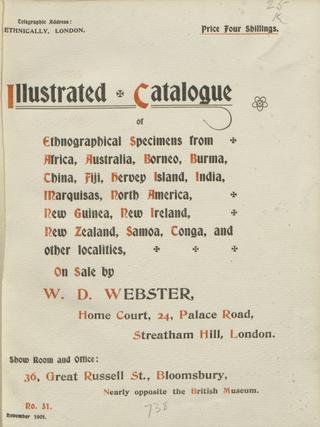
An archival document representing a Sales Catalog of 33 page(s)
Sales Catalogue
Metropolitan Museum of Art
Thomas J. Watson Library sales and auction catalogues
Date
November 1, 1901 to November 30, 1901
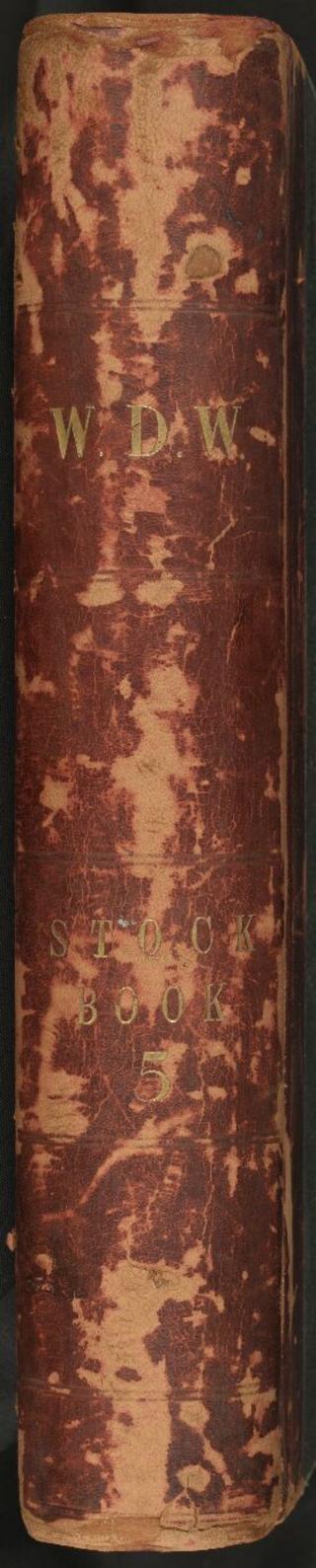
An archival document representing a Inventories of 257 page(s)
Inventory
Museum of New Zealand Te Papa Tongarewa
Stock books
Date
March 24, 1900 to December 31, 1903
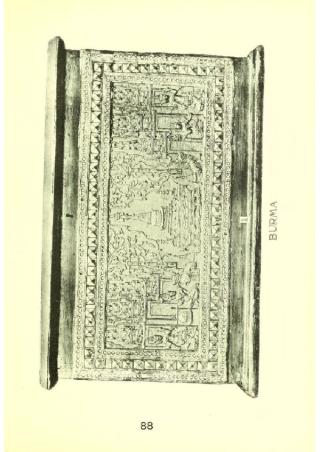
An archival document representing a Sales Catalogs of 52 page(s)
Sales Catalogue
Wellcome Collection
Catalogue of ethnological specimens : European and Eastern arms & armour, Prehistoric and other curiosities / W.D. Webster, Oxford House, Bicester, Oxon., England.
Date
January 1, 1901 to December 31, 1901

Institution data

Staatliche Ethnographische Sammlungen Sachsen und Staatliche Kunstsammlungen Dresden
The data was transferred directly by the institution.
Last updated: 2021-09-28
Language: german
Institution fieldValue
INV_NR
object id
MAf 34559
OBJEKTE_ID
object id
1793434
KURZTITEL
designation
Altaraufsatz
Object-name-and-materials
designation
material
Altaraufsatz Bronze aus mehreren Ringen aufgebauter konischer Bronzegegenstand mit verzierter Plinthe
TITEL
designation
Altaraufsatz;Altaraufsatz, 18. Jh.
INTERNETKOMMENTAR
description
notes
Der Altaraufsatz ist Bestandteil des kulturellen und künstlerischen Erbe des vermutlich 800jährigen Königreiches von Benin. Das Königreich, welches auf dem Gebiet des heutigen südwestlichen Nigeria gelegen hat, wurde 1897 von den Briten erobert und die höfischen Kunstwerke gelangten als Kriegsbeute nach Europa. Der Aufsatz besteht aus insgesamt sieben Ringen, die auf einer verzierten Plinthe münden. Die Ringe sind komplett mit unterschiedlicher Ornamentik überzogen. So sind umrahmende Flechtbandmotive, Köpfe von Europäern, Fische und florale Motive verwendet worden. Die Plinthe zieren Köpfe von Antilopen und Rindern sowie Rüssel, die in einer Faust münden. |(SB)
KATALOGTEXT
description
Übernahme Altdaten (Zustand): Restaurierung: Entnahme einer Probe durch das Rathgen-Institut Berlin am 11.08.2003, Stelle wurde mit Bienenwachs verschlossen H.M.34, Nr. 14389
MATERIAL
material
Bronze
MASSEBEMERKUNG
dimensions
Höhe: 25 cm Durchmesser unten 26 cm, Durchmesser Öffnung oben 5,5 cm
MASSETABANGABE
dimensions
Gesamt (mit Plinthe)
MASSETABBEMERKUNG
dimensions
MASSETABBREITE
dimensions
MASSETABDURCHMESSER
dimensions
26
MASSETABEINHEITLAENGE
dimensions
cm
MASSETABEINHEITLAENGE_IDS
dimensions
1
MASSETABHOEHE
dimensions
25
MASSETABTIEFE
dimensions
Dimensions_weight
weight
H: 25 cm W: 26 x 26 cm
MASSETABEINHEITGEWICHT
weight
MASSETABEINHEITGEWICHT_ID
weight
MASSETABGEWICHT
weight
OBJEKTBEZ
object type
Ritualobjekt
KONVOLUT
provenance
object count
SES Benin-Objekte; SES Dossier Benin-Objekte, Überlieferung an die Kontaktstelle für Sammlungsgut aus kolonialen Kontexten
ORT_DATUM_BIS
date made
1800;1897
ORT_DATUM_KONKRET
date made
';'
ORT_DATUM_VON
date made
1700;
MATTECHBEMERKUNG
production technique
Bronzeguss
TECHNIK
production technique
gegossen
ORTE
production place
;Federal Republic of Nigeria
ORTZEITBEMERKUNG
production place
Königreich Benin, vor 1897, wohl 18. Jh
Ort_Zeit-Bemerkung
production place
Königreich Benin, vor 1897, wohl 18. Jh
REGIONEN
production place
Benin
Collector/Previous-owner
prior source
Hans Meyer
ERWERBUNG
prior source
Ankauf 2001 von Erbengemeinschaft Meyer mittels Finanzierungsverbund (u. a. Kulturstiftung der Länder, Freistaat Sachsen, BKM, Ernst von Siemens-Stiftung und Stadt Leipzig)
PERSON
prior source
unbekannt;Webster, William Downing;Meyer, Hans
Acquisition-Details
provenance
Hans Meyer at unknown date
EIGENTUEMER
provenance
PROVENIENZ
provenance
Händler: W. D. Webster (bis ?); Sammler: Hans Meyer (bis 1929); Elisabeth Meyer (bis 1946); Erbengemeinschaft Meyer (bis 2001)
PROVENIENZSTATUS
provenance
EREIGNISSE
event
;;
ETHNIEN
ethnic attribution
Edo
Institution
department and institution
Staatliche Ethnographische Sammlungen Sachsen - GRASSI Museum für Völkerkunde Leipzig
MUSEUM
department and institution
MVL
Institutional-acquisition-date
accession date
unknown
Comments
notes
Hans Heinrich Joseph Meyer, 1858-1929, German Explorer, Editor, Africanist, professor of colonial history in Leipzig
PRAESENZ
display status
ausgestellt
BIBLIOGRAPHIE
bibliography
'- Ben-Amos, 1999, S. 96ff.;|- Blackmun, 1988, S. 133;|- Duchâteau, 1993, 34 H. Meyer;|- von Luschan, 1919, VIII, S. 367, X, Taf. 66a;|- Germann, 1939, S. 290ff;|- Patrimonia 220, 2002, S. 156
ERWAEHNTIN
bibliography
'- Ausstellungsverzeichnis Peter Göbel 1994-2000, Nr. 3;|- Katalog Kunst aus Benin 1994, S. 101;- KulturStiftung der Länder, Patrimonia 220, 2002, S. 156/157
LITERATUR
bibliography
LIT_LITERATUR
bibliography
Göbel 2002 [Kunst aus Benin - Sa...];Meyer 1994;Luschan 1919
BILDUNTERSCHRIFT
images
Übernahme Altdaten|Region original: Zuordnungsgruppe => Joruba-, Edo- (Benin-) Gruppe Gebiet => BeninRegion-Umzug => Benin|Region bei Datenübergabe: Afrika>Westafrika>Nigeria>Benin
ALTINVENTARE
AUTHENTIZITAETSZUSATZ
;;
AUTHZUSAETZE_IDS
;;
Additional-IDs
14389 (Webster-Nr.); 34 (H. Meyer number)
Dokumentname
MAf 34559 frontal
EREIGNISSE_IDS
;;
ETHNIEN_IDS
2796
ETH_AUTHZUSAETZE
ETH_AUTHZUSAETZE_IDS
ETH_EREIGNISSE
Sammelereignis
ETH_EREIGNIS_IDS
17
FERTIG
1
FLAG
EXP
FOTOFELD
FUNKTION
Hersteller;Händler;Sammler
GEAENDERT_AM
GLEICHRANGIG
GND_ID_OBEZ
265724
GND_ID_SCHLAGWORT
8866;76036;19029;22165;35730
GRUNDDATEN
1
INTERNETFREIGABE
1
INVENTURDATUM
15.05.01;23.03.18
INVNR_MERKMALE_IDS
577;581;581;577;577
KONVOLUTE_IDS
959;1409
KOORDINATEN
;(10 8)
LEIHVERKEHR
Sonderausstellung Hans Meyer 1994
LIT_ABBILDUNG
Tafel XLVII;;
LIT_BAND_SEITE
Bd.220/S.157;Seite 101;Tafel-Band
LIT_BEMERKUNG
schwarz-weiss;schwarz-weiss;schwarz-weiss
LIT_LITERATUR_IDS
184;681;703
LIT_NUMMERE
;;66 a
LIT_STA_INETFREIGABE
1;1;1
MAND_ID
1
MATERIALIEN_IDS
1116
MERKMAL
Aktenstück;Originalnummer;Originalnummer;Aktenstück;Aktenstück
MUSEEN_ID
34
ORTE_IDS
;2328926
ORT_AUTHZUSAETZE
;
ORT_AUTHZUSAETZE_IDS
;
ORT_BEZUG
;
ORT_EREIGNISSE
Herstellung;Sammelereignis
ORT_EREIGNISSE_IDS
12;17
PND_BEZUG
;;
PND_FUNKTIONEN_IDS
-2;645;642
PND_INETFREIGABE
1;1;1
PND_PERSONEN_IDS
12797488;12821279;11145307
PRAESENZEN_WERT_ID
-38
PROVSTATUS_WERT_ID
REGIONEN_IDS
612
REG_EREIGNISSE
Sammelereignis
REG_EREIGNIS_IDS
17
SAMMLUNG
Afrika
SAMMLUNGEN_ID
534
SCHLAGWORT
Altar;Aufsatz;Kult;Ornament;Tier
TECHNIKEN_IDS
75
UNTERGEORDNET
VORLAGEN
Ahnliches Objekt im Ethnologischen Museum Berlin (III C 84965)
WEITERE_NUMMERN
2001/14;14389 (Webster-Nr.);34 H. Meyer;L 1929/2;1989/21
WISSENSCHAFT
1
XRAY
###
Sensitive Content

Digital Benin collates digital material from institutions, and some of this material is inherently colonial and contains words, terms and phrases that are inaccurate, derogatory and harmful towards African and African diasporic communities. Catalogue transcriptions, book titles, exhibition titles and museum titles may contain harmful terms. We recognise the potential for the material to cause physical and mental distress as well as evoke strong emotions. Owing to the scale of the collection’s data, a process to implement sensitive-content warnings in the displayed data is still incomplete. The material within the catalogue does not represent Digital Benin’s views. Digital Benin maintains a strong anti-colonial, anti-racist position and affirms its support for centring the humanity of historically marginalised and disenfranchised communities. Read more about the background of this statement here