
idno
E 1904.377
Edo designations
English designations
Male Figure
Categories
Figures
Location
1 Adesogbe (Plymouth) Road, P.M.B. 1115, Benin City , Edo State
Loading...
Male Figure
Male Figure
Male Figure
Male Figure
Male Figure
Male Figure

Iconographies

8 annotations
Ẹrhu
Headwear

Many different kinds of Ẹrhu (headwear) are worn by the various figures depicted in the imagery of Benin royal artefacts. Through comparisons with ceremonial regalia still worn by chiefs and members of the royal court, including the Ọba himself, some Ẹrhu have been used to identify the different figures depicted. For example, the conical hat worn by high-ranking town chiefs as part of the pangolin regalia, still worn at ceremonies, is also visible on figures on some Ama-Ẹrọnmwọn (bronze relief plaques) ( ). Other examples include the distinctive bell-shaped helmet associated with the Iyasẹ ( ). Figures who wear a shallow-brimmed hat and a cross have been identified as Ewua or Ohensa priests ( ).

Different kinds of helmets and headwear were worn by warriors, reflecting the many different ranks and roles in the army at any given time, as well as developing trends that were in turn represented on Emwin Arhe created at different points in time. Warrior figures wearing helmets covered in cowrie shells were carved on the Aken'ni Elao (carved tusks) (Blackmun 1984, p. 330), yet on the brass Ama, warriors are sometimes depicted wearing helmets made from crocodile hide or horsehair with a front plate (Osadolor in Plankensteiner 2007, cat. no. 238, p. 457). Helmets made from horsehair with a front plate are one of the more common types represented on the Ama-Ẹrọnmwọn, and the demand for black horse tails was noted by both Portuguese and British traders during the late 17th and 18th centuries (Osadolor in Plankensteiner 2007, cat. no. 238, p. 457). Other warriors depicted on Ama-Ẹrọnmwọn wear helmets with a rounded top, chinstrap, and sometimes also a feather tucked into the left side. These types of headwear are known as Ẹrhu Iyokuo.

Attire worn for battle also differed from that worn for ceremonial occasions, such as the pointed headwear worn in combination with an ornate leopard-head tunic by war chiefs. Depictions of figures wearing this attire on brass Ama-Ẹrọnmwọn (bronze relief plaques) have been interpreted as representing the war chiefs’ participation in the war-ritual Isiokuo festival (Osadolor in Plankensteiner 2007, cat. no. 238, p. 457).

Another distinctive form of headwear is that worn by figures identified as leopard hunters on the brass Ama-Ẹrọnmwọn (relief plaques). These large helmets cover almost all of the leopard hunters’ faces except for their noses, eyes, and upper lips, and are made of an unusual material that remains unidentifiable (Plankensteiner 2007, cat. nos. 68–69, p. 322).

European figures are also portrayed with distinctive hats, such as Portuguese three-cornered hats. These depictions reflect the artists’ keen observation and highlight the impact of European trade and military assistance (Ezra 1992).

1 annotation
Ẹrhu
Asa
Shield

Asa (shields) are a crucial attribute of warriors and warrior chiefs, forming part of their ceremonial and battle attire as represented on the Emwin Arhe (royal treasures). Asa were usually made from elephant or crocodile skin and used by warriors for protection during hand-to-hand combat (Osadolor 2001, p. 102). Interestingly, the form of Asa depicted on historic royal artefacts differs from those found in museum collections today, reflecting changes in shield shapes and designs over time.

1 annotation
Asa
Udahae
Beaded forehead band

The Udahae is a forehead band made from coral beads and worn by chiefs. Sometimes a white Igan (feather) from the Oɛɣohɔ (vulturine fish eagle) is tucked into the left side of the Udahae. According to Benin oral tradition, the Udahae was introduced by Ọba Ezoti, the first son of Ọba Ewuare I. During his coronation, Ezoti was shot in the forehead with a poisoned arrow. To stop the bleeding, a band of red beads was wrapped around his forehead while he made public appearances. Fourteen days later, he died from his wound. Since then, Benin chiefs have worn the red-beaded Udahae around their foreheads to commemorate the cap used by Ezoti to stop the bleeding (Egharevba 1968, p. 21).

1 annotation
Udahae
tribal marks
Iwu
Facial and Body Markings

Iwu are facial and body markings (scarifications) that were historically worn by Edo men and women. However, since the 1960s, the practice has been nearly extinct (Aisien 2011). In the past, Iwu were used as a way of proving that one was an Edo citizen, and the ceremony of having Iwu completed was an important rite of passage for men and women. The Osiwu, who also practised circumcision and other surgical procedures, would carry out the procedure of adding Iwu. There are different types of Iwu: ‘blades’ worn on the torso (Iwu-eko), and those worn on the face, such as Ikharo (three or four markings above the eyebrows), Irho (two narrow ‘blades’ worn on each cheek), Ovbihue (nasal ‘blades’), Ovbi-agbanmwen (chin ‘blade’), and Igho-okpa/Ukpgho (three forehead ‘blades’) (Aisien 2011, p. 22).

The number of Iwu also varied depending on the identity of the person wearing them. For example, royal men would wear six ‘blades’ on their torso, whilst men who were not royal would wear seven ‘blades’. Meanwhile, the Ọba’s female children would wear fifteen ‘blades’, and all other women would wear sixteen (Aisien 2011).

1 annotation
Iwu
leopard teeth
Akọn Ẹkpen
Leopard Teeth Neck Ornament

Akọn Ẹkpẹn are necklaces or neck ornaments made of strung leopard’s teeth. They are worn by figures to signify their high rank and military prowess, as well as by their leaders, the Ezọmọ or Iyasẹ. They are often worn alongside quadrangular Ẹroro (bells) and Ohian Ẹkpẹn (leopard tunics).

The Akọn Ẹkpẹn is clearly and profoundly related to the symbolism of the Ẹkpẹn (leopard) and its association with the Ọba (king), who is metaphorically referred to as ‘ẹkpẹn ne owa’, the ‘leopard of the home’. On the other hand, the Ẹkpẹn is often referred to as the ‘king of the bush’, embodying ferocity, aggression, strength, and leadership—qualities attributed to the Ọba (Nevadomsky 1988). This intricate link between the leopard, the monarch, and his military leaders reinforces the complex hierarchy and spiritual authority central to Benin’s courtly art.

1 annotation
Akọn Ẹkpen
Asoro
Spears

Asoro (spears) were used as weapons in battle and for hunting ( ; Ọbazee 2025, p. 37). According to , there were two types: long and short. Figures holding Asoro are often depicted on Ama-Ẹrọnmwọn (bronze relief plaques), sometimes in battle scenes and at ceremonies and festivals.

1 annotation
Asoro
TBC_Warrior figure
Warrior

The frequency with which Benin warriors are depicted in Emwin Arhe (royal treasures) reflects the importance of the army and military to the Kingdom, as well as the role of royal art as an archive in which artists from the palace guilds recorded important people, events, and institutions. The army was organised into a number of regiments, with soldiers grouped according to the weapons they used, including archers, swordsmen, crossbowmen, and spearmen ( ).

Warrior figures are frequently shown carrying weapons such as Asa (shields), Asoro (spears), warfare swords such as the Umozo or Ọhọ (executioners’ or warfare swords), Uhanbọ (bows), Ẹkpẹde (crossbows), and Ifẹnmwẹ (arrows), which were sometimes poisoned, as well as Osisi (firearms). Their dress also provides important indications of their military role. On both the Aken'ni Elao (carved tusks) and Ama-Ẹrọnmwọn (bronze relief plaques), warriors are depicted in a relatively standardised form, typically wearing an Ohian Ẹkpẹn (leopard tunic), Akọn Ẹkpen (leopard’s tooth neck ornament), an Ẹroro pendant around the neck, and the Uko ugbo-ohamwen (fortified chest band) ( ).

Differences are particularly apparent in the warriors’ headwear, both between individual figures and between representations on Aken'ni Elao and Ama-Ẹrọnmwọn. On the Ama - Eronmwon, the most common forms of headwear are crocodile-hide helmets and horsetail helmets with a front plate ( ). On the Aken'ni Elao, some warriors wear double-horned helmets ( ), while others wear simple rounded hats or helmets ( ). The most frequently represented warrior type on the tusks, however, wears a helmet with cowries sewn onto a front panel ( ).

1 annotation
TBC_Warrior figure
Ikan Aro
Incised forehead markings

Ikan Aro are two linear markings in the centre of the forehead, located in between the eyes. These are usually inset with iron on depictions otherwise made of brass, bronze, ivory or wood.The use of iron was significant due the association of this metal with Ogun, who is god of iron and metal. These markings appear on both men and women, however are a common feature of representations of Iy'Oba Idia. Flora Kaplan (1993, 59) argued these are not tattoos, unlike the Ikharo. According to Nevadomsky (1986, 42), these incisions "signify determination, firmness, resolve, or even maturity". Kaplan (1993, 59) has also made a link between these markings and oral history told to her by Oba Erediauwa describing the events leading up to Idia (before she was Iy’Ọba) becoming the wife of Ọba Ozolua, whereby her parents tried to disfigure her to “repel” the Ọba. According to this history, the Ọba “sensing something was wrong”, called his doctors to intervene and treat her quickly, and as so she still became his wife.

1 annotation
Ikan Aro

Provenance

5 events
Production
unknown to February 22, 1897 (day approximate)
The object was produced by Unknown member(s) of the Igun-Ẹrọnmwọn guild in Benin City.
Looted
February 22, 1897 (day approximate) to June 1899 (year approximate)
The object was looted by Unknown member of the British colonial military campaign on Benin - February 1897 from Benin Kingdom.
Unknown
February 22, 1897 (day approximate) to 1904
The object is known to have come into contact with William Downing Webster, later in London.
Purchase
1904
The object was purchased by the Museum of Archaeology and Anthropology, University of Cambridge from William Downing Webster through Francis John Henry Jenkinson from London to Cambridge.
Restitution
February 8, 2026
The object was restituted by the Museum of Archaeology and Anthropology, University of Cambridge to the Omo n'Oba n'Edo Uku Akpolokpolo, Ọba of Benin & National Commission for Museums and Monuments, Nigeria from Cambridge to Nigeria.

Related archival documents

3 documents
See all
An archival document representing a Inventories of 257 page(s)
Inventory
Museum of New Zealand Te Papa Tongarewa
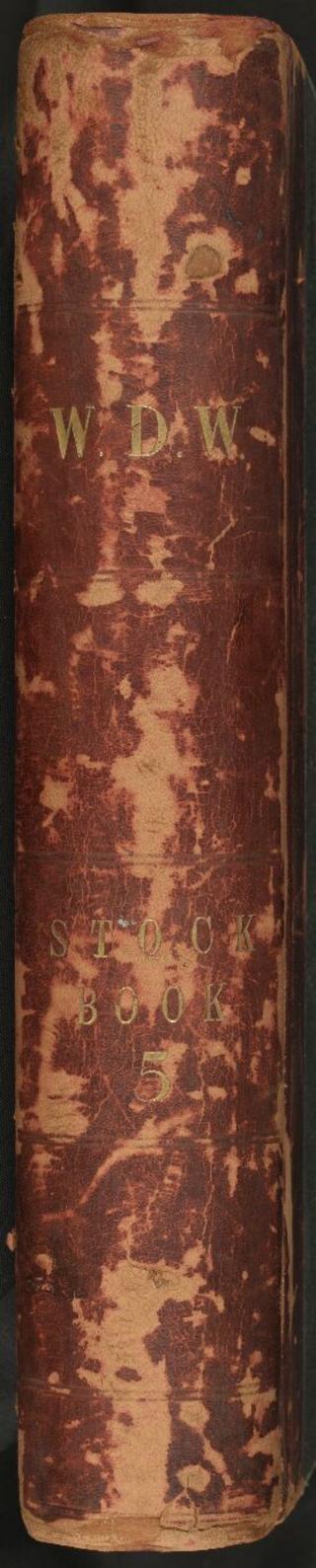
Stock books
Date
March 24, 1900 to December 31, 1903
An archival document representing a Photograph Album of 2 page(s)
Photograph Album
British Museum
W. D. Webster photograph album
Date
January 1, 1898 to December 31, 1899
An archival document representing a Sales Catalogs of 52 page(s)
Sales Catalogue
Wellcome Collection
Catalogue of ethnological specimens : European and Eastern arms & armour, Prehistoric and other curiosities / W.D. Webster, Oxford House, Bicester, Oxon., England.
Date
January 1, 1900 to December 31, 1900

Institution data

Museum of Archaeology and Anthropology, University of Cambridge
The data was transferred directly by the institution.
Last updated: 2022-07-18
Language: english
Institution fieldValue
idno
object id
E 1904.377
local
edo designation
Physical description/0
description
Catalogue card notes: "Standing figure of a man cast in bronze holding three javelins in one hand and an oblong shield in the other hand."
Physical description/1
description
K. Sutton: 'Evidence of old bronze disease on the base of the object; ?live in one of the rivet holes'.
Physical description/2
description
Physical description/3
description
Physical description/4
description
d_Description Name
description
Standing figure of a man cast in bronze holding three javelins in one hand and an oblong shield in the other hand. Evidence of old bronze disease on the base of the object.
height
dimensions
252 mm
length
dimensions
124 mm
width
dimensions
174 mm
weight
weight
3.5 kg
Inscription
inscriptions
Labels - Markings/0
inscriptions
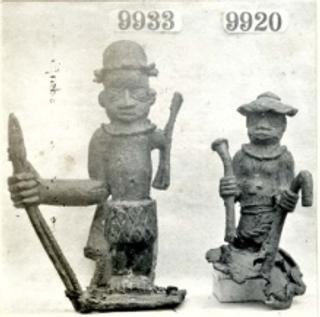
The number '9933' has been written on the base of the figure in white. Probably the Webster 1904 sale lot number.
Labels - Markings/1
inscriptions
Handwritten label affixed to object reads: 'E.1904.377 Bronze Figure. Benin. (Webster's Sale Nov 30 '04) *F.J.H. Jenkinson, M.A.'.
Labels - Markings/2
inscriptions
Labels - Markings/3
inscriptions
Labels - Markings/4
inscriptions
Labels - Markings/5
inscriptions
period
date made
14th - 19th century
maker
producer
d_Place
production place
Africa; West Africa; Nigeria; [Kingdom of Benin]; Edo State; Benin City; Oba's Palace
Other owners
prior source
source
prior source
Webster, William Downing [vendor]; Fenton, Samuel G. [purchaser]; Jenkinson, Francis John Henry [monetary donor]
Collection or Excavation Year
date collected
culture group
ethnic attribution
Edo
source date
accession date
1904
Amendments - updates/0
notes
Amendments - updates/1
notes
Amendments - updates/2
notes
Amendments - updates/3
notes
Amendments - updates/4
notes
Exhibition/0
exhibition history
Exhibition/1
exhibition history
Reference Numbers
bibliography
E 1904.377 MAA: AR 1905.778 Other: 9933 [Webster lot number]
References/0
bibliography
Fenton's antique dealers established a well-known 'Old Curiosity Shop' in the mid 19th century in Bury St. Edmunds. George Fenton was trading at 5 & 6 Meat Market, Bury St. Edmunds in 1855. By 1888, if not earlier, they had opened 'The Old Curiosity Shop' in London, 11, New Oxford Street, where Samuel G. Fenton was trading as Fenton and Sons. Letters to Gen. Pitt Rivers, regarding potential new acquisition are addressed from Fenton and Sons on Oxford Street and are dated to 1888. See http://web.prm.ox.ac.uk/rpr/index.php/primary-documents-index/16-second-collection-1880-1900/659-pitt-rivers-and-fentons/index.html See also Antique Dealers: the British Antique Trade in the 20th Century, https://antiquetrade.leeds.ac.uk/dealerships/36132 Both accessed 2/10/2018.
References/0 2
bibliography
Photographed as part of the Art UK Sculpture project, August - September 2019. The project aims to create a free-to-access online photographic showcase of publicly owned sculpture. The three-year project focuses on sculpture dating from the last 1,000 years, held in public collections and outdoor locations across the UK
References/1
bibliography
Related Documents/0
bibliography
Replacement catalogue card reads, in black biro: "1904 E 377 | AFRICA / WEST AFRICA / NIGERIA / Standing figure of MAN cast in bronze holding three javelins in one hand and an oblong shield in the other hand. H. 9.4" / Benin / Purchased Webster's Sale 1904 / F.J.H. Jenkinson's donation | R. 1905 778" Red circular sticker in bottom right of card.
Related Documents/1
bibliography
Photograph attached to rear of catalogue card. Produced during the 2000-2002 DCF Shorts Project.
Related Documents/2
bibliography
Related Documents/3
bibliography
Related Documents/4
bibliography
Related Documents/5
bibliography
Related Documents/6
bibliography
Acquisition Details/0
Acquisition Details/1
Acquisition Details/2
Analysis/0
Analysis/1
Archaeology
Auction - Sale/0
Catalogue card reads "Purchased, Webster Sale 1904, F.J.H. Jenkinson's donation." F.J.H. Jenkinson M.A.
Auction - Sale/1
E 1904.376 is noted in the register as 'Benin/ Webster Sale 1904' and annotated 'though S.G. Fenton'. This is written in the line for E 1904.376 but the ditto marks below suggest it may apply to the whole F.J.H. Jenkinson donation.
CMS Context/0
CMS Description
Catalogue
Display/0
Displayed from 4/12/1989 to 2/12/1990.
Display/1
Display/2
Display/3
Field_collection/0
Field_collection/1
Found_together - assemblage
Freezing
Online Only
Other/0
Other/1
Production - use
Remedial/0
Remedial/1
Surface Clean
unknown
Sensitive Content

Digital Benin collates digital material from institutions, and some of this material is inherently colonial and contains words, terms and phrases that are inaccurate, derogatory and harmful towards African and African diasporic communities. Catalogue transcriptions, book titles, exhibition titles and museum titles may contain harmful terms. We recognise the potential for the material to cause physical and mental distress as well as evoke strong emotions. Owing to the scale of the collection’s data, a process to implement sensitive-content warnings in the displayed data is still incomplete. The material within the catalogue does not represent Digital Benin’s views. Digital Benin maintains a strong anti-colonial, anti-racist position and affirms its support for centring the humanity of historically marginalised and disenfranchised communities. Read more about the background of this statement here