

Iconographies





Provenance
Institution data
| Institution field | Value |
|---|---|
Reg No. object id | VK C 3172 |
Object name and materials designation | Queen's head |
Material material | metal alloy |
Dimension/s dimensions | H. 52 cm W. 27 cm D. 28 cm |
Provisional dating date made | end of 18th/beginning of 19th cenutry |
Creditline prior source | Acquisition through the mediation of Prof. Wehrli from the Museum of Ethnology Zurich |
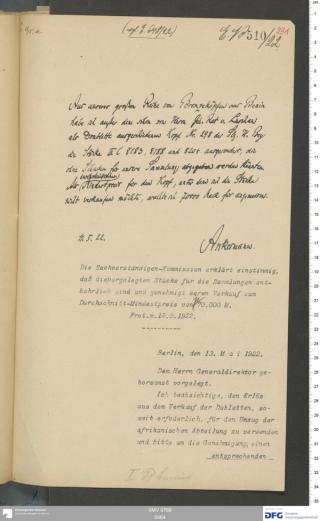
Provenances provenance | Late18th - early 19th century, commissioned from the Royal Bronze-casting Guild (Igun Eronmwon) by the Royal Palace of Benin; by descent to Oba Ovonramwen (Ovonramwen Nogbaisi, b. about 1857 - d. about 1914; r. 1888 - 1897); 1897, looted from the Royal Palace during the British military occupation of Benin; 1898, Consul Eduard Schmidt; 1898-1922: Königliches Museum für Völkerkunde Berlin (Reg.No.: III C 8188); from 1922, Firm Ludwig Glenk; [...]; until 1931 Han Coray (Reg.No.: BK 02) (collector, Agnuzzo) ; 1931-1940, Schweizerische Volksbank; 1940, Völkerkundemuseum der Universität Zürich; since 1940 Historisches und Völkerkundemuseum St. Gallen |
Institution department and institution | HVM Historisches und Völkerkundemuseum St. Gallen |
Institution acquisition date accession date | December 1940 |
Additional IDs | III C 8188 Berlin |
| Institution field | Value |
|---|---|
Reg No. object id | VK C 3172 |
Titel designation | VK_C_3172_137 Gedenkkopf einer Königinmutter Benin |
Beschreibung description | C 3172_137 Coray Nr. BKö 2 III C8188 aus dem Berliner Museum für Völkerkunde Nigeria, Benin Gedenkkopf Königin Bronze spitze Kopfbedeckung (Korallenperlennetz) grosser Ringschmuck am Hals, Gehänge über dem Nacken 52 cm hoch Plinthe (Rand unten) Herstellungsqualität eher zweitklassig. Aufgrund ihrer Provenienz aus dem Berliner Museum sehr wertvoll. Laut Andreas Schlothauers Recherchen: Er hat das Inventarbuch in Berlin abfoto-grafiert und dort ist der Hinweis sichtbar: III C 8188 in Berlin im Inventarbuch 1922 ausgetragen. Verkauft an einen Herrn Glenk. Das Königreich Benin wurde in Nigeria von den Edo gegründet. Perlen aus roten Korallen sind häufig in der Kleidung des Oba und von höfischen Würdenträgern zu finden. Am Hals des ausgestellten Kopfes sind mehrere Perlen-reihen und auf dem Kopf eine netzartige Mütze aus Perlen angedeutet. Der Kopf erreichte das Museum mit dem Ankauf der Sammlung Han Coray im Jahr 1940 und zählte stets zu den wichtigsten Objekten des Museums aus Afrika. Auf der Rücksei-te sind zwei Nummern erkennbar, die erst im Jahr 2012 ausgewertet wurden: „IIIC8188“: Dies ist die Inventarnummer des heutigen Ethnologischen Museum Ber-lin. Mit der dortigen Sammlungsdokumentation lässt sich belegen, dass der Kopf 1898 Consul Eduard Schmidt abgekauft und im Jahr 1922 an einen Herrn Glenk verkauft wurde. „BK02“: Diese Nummer stammt von Han Coray. Auf dem obigen Foto seines dama-ligen Salons (um 1925) ist er auf dem Tisch zu sehen. Wann und von wem Coray den Kopf erwarb, ist nicht bekannt. Ergebnis: Der Kopf gehört zu den Altbeständen aus Benin vor 1897. Schlothauer, Andreas: Gefunden – Drei Benin-Köpfe ehemals Berlin. In: Kunst&Kontext Nr. 3, 2012: 77-80 Zu Konsul Eduard Schmidt: Felix von Luschan, Die Altertümer von Benin, 1919 (= Veröffentlichung aus dem Museum für Völkerkunde, Staatliche Museen zu Berlin; Bd, 8), 8-9. Die Kriegsbeute von Benin war zur Zeit der Einnahme der Stadt nicht einmal von den Eingeborenen selbst mehr richtig bewertet worden; die grosse Mehrzahl der kostbaren, aus Erz gegossenen Platten wurde wie wertloser Kram in einem längst verfallenen Hause und mit einer dicken Staubschickt bedeckt vorgefunden, und auch die Sieger haben sie zunächst nicht wesentlich höher bewertet: „Silber gab es nicht und Gold gab es nicht, das Elfenbein war verwittert und die Korallen waren auch nicht viel wert.“ So beschränkten sich die Teilnehmer an der Strafexpedition im wesentlichen, wie es scheint, auf die Mitnahme von „Andenken“; ein nicht ganz geringer Teil ist auch bei dem grossen Brande vernichtet worden, der am 21. Februar, also am dritten Ta-ge nach der Einnahme der Stadt, ausbrach (…) Das weitere Schicksal dieses einzigartigen Fundes ist sehr wechselvoll gewesen. Ein grosser Teil der Stücke war als „Kriegsbeute“ in den Besitz von Offizieren und Seesoldaten gekommen und wurde schon nach wenigen Tagen wieder in Lagos an Händler verkauft; von drei Serien, zum Teil mit ganz hervorragend schönen Stücken weiss ich, dass sie mehrere Jahre lang in englischem, Privatbesitz zusammengen-halten, schliesslich aber doch auch verhökert wurden. Andere Serien kamen, teil-weise unter der Bezeichnung „damaged ivory“ sehr rasch in den Besitz von Londo-ner Händlern oder in Londoner Auktions-Institute. So stammt auch die erste grösse-re nach Berlin gelangte Sammlung aus einer Auktion bei Hale & Son, London; zu ihr gehört neben einer Anzahl von schönen Köpfen und Platten vor allem fast ein Dutzend schöner grosser, ganz mit Schnitzwerk bedeckten Elefantenzähne. Unter dem Eindruck dieser Auktion, von der ich nur ganz zufällig erfahren hatte und zu der ich gerade eben noch im letzten Augenblick hatte eintreffen können, sandte ich noch aus London eine Depesche an das Deutsche Konsulat in Lagos mit der Bitte, von Benin-Altertümern für das Berliner Museum zu kaufen „was immer erreichbar und ohne Rücksicht auf den Preis.“ Dieses zunächst auf meine eigenen persönliche Gefahr und Verantwortung abge-sandte Telegramm hat uns in der Folge, danke dem einsichtsvollen und weitbli-ckenden Wohlwollen der Generalverwaltung der Königlichen Museen, zwei grosse Serien zugeführt, eine, die bei uns immer den Namen von Konsul Eduard Schmidt lebendit erhalten wird, mit 80 Nummern und eine zweite noch sehr viel grössere mit 176 Nummern, die unter dem Namen H. Bey katalogisiert ist; die Sammlung Schmidt brachte uns eine Anzahl von schönen grossen Köpfen und besonders mehrere Gruppen in Rundguss, wie sie so gross und so zahlreich in kein anderes Museum gelangt sind; die Sammlung sind. Die Sammlung Bey dagegen besteht überwie-gend aus Platten, enthält aber auch eine ganze Reine von grossen eisernen, teil-weise mit Erz überfangenen „Fetischbäumen“ und zahlreiche andere kostbare und in ihrer Art einzige Stücke. Andere grössere Serien, im ganzen 82 Stück, habe wir später noch von einem englischen Händler (…) gekauft, kleinere Serien oder ein-zelne Stücke von anderen englischen Händlern oder auf englischen Auktionen (…) Mit einigen Stücken aus dem alten Bestande des Museums und mit verschiedene Einzelerwerbungen kann sich so das Berliner Museum des Besitzes von 580 Nummern aus Benin rühmen, zu denen noch 44 Gipsabdrücke und 10 Stücke kommen, deren Herkunft nicht ganz gesichert ist. So steht das Berliner Museum für Völkerkunde in dieser Hinsicht bei weitem an der Spitze aller Museen. Ausserdem haben wir aus den beiden grossen, aus Lagos eingegangen Sammlungen im gan-zen noch über hundert weitere Stücke als Dubletten oder als bei uns entbehrlich an andere Museen abgeben können. |
Legende description | App 100 Objekte 2021 / Gedenkkopf einer Königinmutter Nigeria, Königreich Benin, Ende 18. bis Ende 19. Jahrhundert Gelbguss Ankauf 1940 VK C 3172 Gedenkkopf für eine Königinmutter „iyoba“ Meisterwerke wurden für den Ahnenkult der königlichen Familie geschaffen. Die grossen Köpfe mit ehemals eingepassten geschnitzten Elefantenzähnen auf den Altären der Paläste stellten die verstorbenen Obas bzw. deren Mütter dar. Schmuck-narben zeichnen die Stirn. Eine aus Korallenperlen geflochtene Haube bedeckt die „Hühnerschnabel“-Frisur der Iyoba. Gelbguss mit Eiseneinlagen Benin/Nigeria; Ende 18. / Anfang 19. Jh.n.Chr. Gedenkkopf für eine Königinmutter «iyoba» Gelbguss mit Eiseneinlagen Nigeria, Königreich Benin, Edo Ende 18. / Anf. 19. Jh. Ankauf Coray, 1940 Meisterwerke wurden für den Ahnenkult der königlichen Familie aus Benin ge-schaffen. Die grossen Köpfe mit ehemals eingepassten geschnitzten Elefanten-zähnen auf den Altären der Paläste stellten die verstorbenen Obas bzw. deren Müt-ter dar. Schmucknarben zeichnen die Stirn. Eine aus Korallenperlen geflochtene Haube bedeckt die «Hühnerschnabel»-Frisur der «iyoba». C 3172 Kopf Westafrika, Benin (Nigeria) vor 1928 Ankauf Han Coray, 1940 HVM VK C 3172 Perlen aus roten Korallen sind häufig in der Kleidung des Oba und von höfischen Würdenträgern zu finden. Am Hals des ausgestellten Kopfes sind mehrere Perlen-reihen und auf dem Kopf eine netzartige Mütze aus Perlen angedeutet. |
Masse material | Maximalmass H 52 x B 27 x T 28 cm |
Oberbegriff object type | Skulptur, Figur |
Entstehungsjahre date made | Ende 18. / Anfang 19. Jahrhundert |
Material/Technik production technique | Bronze, Gelbguss mit Eiseneinlagen |
Techn. Kategorie production technique | Gussarbeit |
Herkunft production place | Afrika, Westafrika, Nigeria, Königreich Benin |
Unterkategorie production place | Afrika Untertitel: uhunmwun elao |
Provenienz provenance | 12.1940 / Han Coray / Ankauf / Erwerb aus der Privatsammlung Coray, Agnuzzo / 1600 CHF |
Ethnie ethnic attribution | Edo |
Ausstellungen exhibition history | Dauerausstellung Afrika bis 2012 Dauerausstellung Afrikasaal Vitrine 26 ab 2014 Dauerausstellung Afrikasaal Vitrine Afrika 23 ab 2016 |
Objektzustand condition | Gut: Ausstellungsobjekt Anmerkung: Herstellungsqualität eher zweitklassig. |
Depotplätze/Anzahl | 1 |
Depotplätze/Standort | Intern |
Kategorie | Völkerkunde |
Prüfungsart | Augenschein |
Restaurierung | 15.08.2018 Trockenreinigung mit Pinsel Trockenreinigung mit Pinsel Sabina Carraro, Rahel Spirig |
Digital Benin collates digital material from institutions, and some of this material is inherently colonial and contains words, terms and phrases that are inaccurate, derogatory and harmful towards African and African diasporic communities. Catalogue transcriptions, book titles, exhibition titles and museum titles may contain harmful terms. We recognise the potential for the material to cause physical and mental distress as well as evoke strong emotions. Owing to the scale of the collection’s data, a process to implement sensitive-content warnings in the displayed data is still incomplete. The material within the catalogue does not represent Digital Benin’s views. Digital Benin maintains a strong anti-colonial, anti-racist position and affirms its support for centring the humanity of historically marginalised and disenfranchised communities. Read more about the background of this statement here