TBC King's Mark
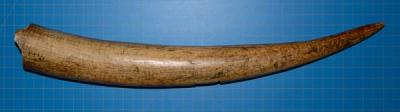
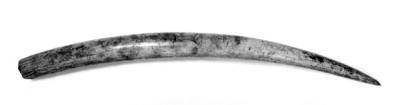
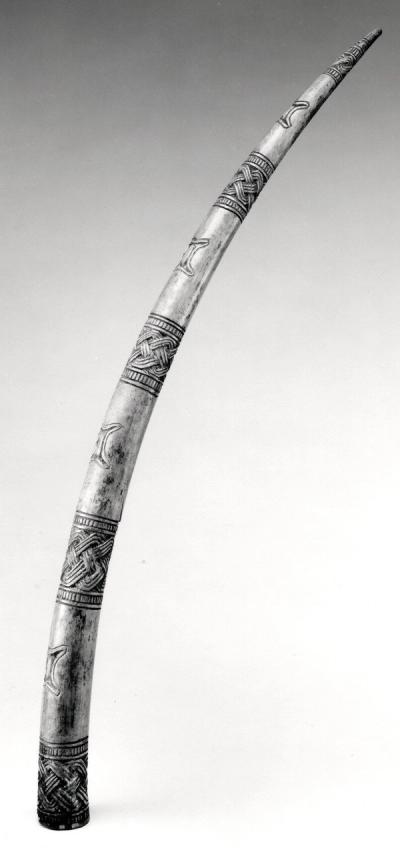
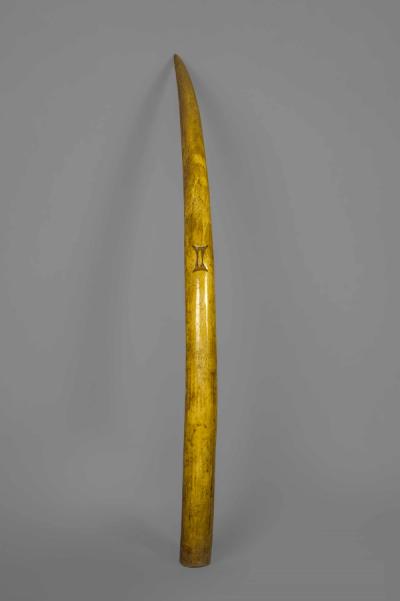
The King’s Mark primarily refers to a marking carved on elephant tusks in the form of two serif ‘I’ letters placed side by side. The marks served as a clear declaration of the royal court’s ownership of these tusks and underscored the Ọba’s key role in controlling trade relations, especially concerning ivory (Eisenhofer in Plankensteiner 2007, cat. no. 37, p. 297). Historically, the Ọba held a near monopoly on ivory, being entitled to one tusk from every elephant slain within the kingdom (Plankensteiner 2007, p. 293). This established ivory as a direct symbol of the Ọba’s power and wealth.


Digital Benin collates digital material from institutions, and some of this material is inherently colonial and contains words, terms and phrases that are inaccurate, derogatory and harmful towards African and African diasporic communities. Catalogue transcriptions, book titles, exhibition titles and museum titles may contain harmful terms. We recognise the potential for the material to cause physical and mental distress as well as evoke strong emotions. Owing to the scale of the collection’s data, a process to implement sensitive-content warnings in the displayed data is still incomplete. The material within the catalogue does not represent Digital Benin’s views. Digital Benin maintains a strong anti-colonial, anti-racist position and affirms its support for centring the humanity of historically marginalised and disenfranchised communities. Read more about the background of this statement here