
Elubasẹ/Isevbere
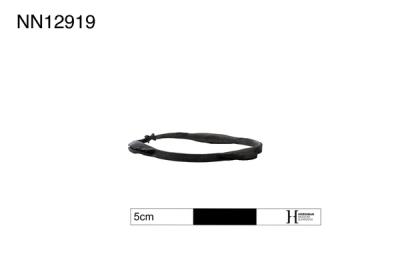
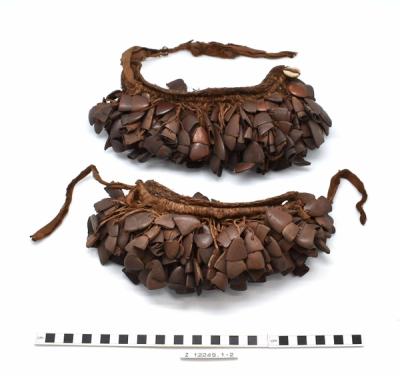
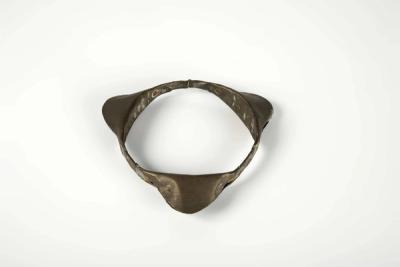
Elubasẹ are a type of Eguen, an anklet which has integral rattles. The rattle pellet is made from fibre originating from the Urua palm (Borassus flabellifera). Each rattle is about 5 cm in diameter and contains two or three Esalobo grains. According to oral tradition, Eguen anklets were introduced into Benin by Ogiso Ere in the tenth century. Elubasẹ are worn by children as a way to track their movements.
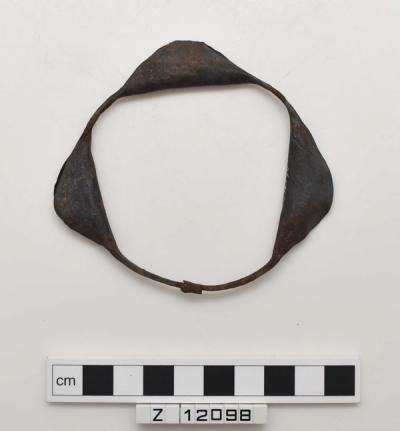
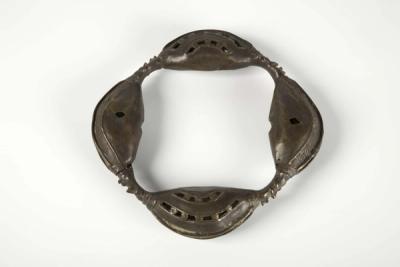
As early as 1899, Read and Dalton commented that the anklets worn by figures on plaques were a signifier of high rank. Today, anklets continue to signify social status – the Ọba wears many ivory and coral anklets up his calves as part of his ceremonial regalia (Okpokunu, Agbontaen‐Eghafona & Ojo, 2005, p.162 ). However, anklets were not the preserve of the Ọba alone, and different kinds and quantities were worn by other members of the royal court and Edo people. For example, Flora Kaplan (2006, p.85 ) described a photograph of Iy’Ọba Aghahowa N’Errua, who took her title in 1981, in which she wears coral anklets as one of a number of insignia of her newly invested high rank. In contrast, brass anklets would be worn by young male attendants to the Ọba (see attendant figure), such as sword bearers or Omada pages (Kaplan, 2006, p.90 ).

Educational Material
Digital Benin collates digital material from institutions, and some of this material is inherently colonial and contains words, terms and phrases that are inaccurate, derogatory and harmful towards African and African diasporic communities. Catalogue transcriptions, book titles, exhibition titles and museum titles may contain harmful terms. We recognise the potential for the material to cause physical and mental distress as well as evoke strong emotions. Owing to the scale of the collection’s data, a process to implement sensitive-content warnings in the displayed data is still incomplete. The material within the catalogue does not represent Digital Benin’s views. Digital Benin maintains a strong anti-colonial, anti-racist position and affirms its support for centring the humanity of historically marginalised and disenfranchised communities. Read more about the background of this statement here