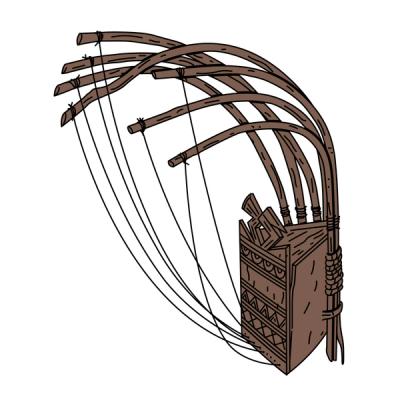
Akpata
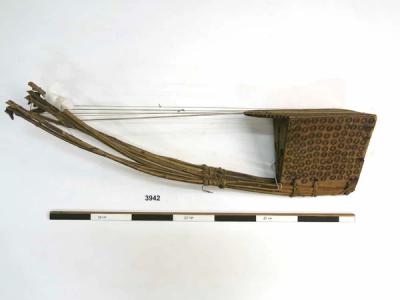
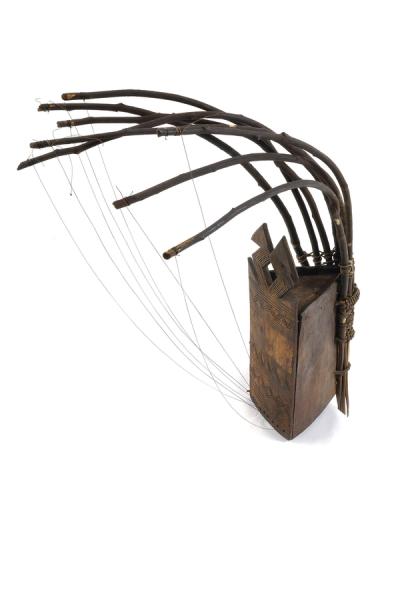
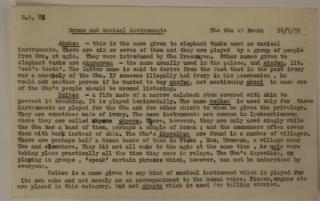
Akpata (bow lute) is a harp-like instrument made of wood and strings which makes a sound like a guitar. They continue to be used for entertainment during special festivals and ceremonies. Historically, the Akpata was one of the key musical instruments alongside the Asologun played by Edo musicians to accompany narrators during storytelling (Ben-Amos, 1975, p.25 ).
The distinctive instrument is made from soft wood, while the seven rods are made from branches of a bush which is also known as Akpata. The strings are made from metal or palm-tree fibre, and ‘rattlers’ are made from palm-tree seeds. The strings and the rattlers are the noise-making components (Ben-Amos, 1975 ). The Akpata can be seen represented on some of the cast relief plaques.


Educational Material
Digital Benin collates digital material from institutions, and some of this material is inherently colonial and contains words, terms and phrases that are inaccurate, derogatory and harmful towards African and African diasporic communities. Catalogue transcriptions, book titles, exhibition titles and museum titles may contain harmful terms. We recognise the potential for the material to cause physical and mental distress as well as evoke strong emotions. Owing to the scale of the collection’s data, a process to implement sensitive-content warnings in the displayed data is still incomplete. The material within the catalogue does not represent Digital Benin’s views. Digital Benin maintains a strong anti-colonial, anti-racist position and affirms its support for centring the humanity of historically marginalised and disenfranchised communities. Read more about the background of this statement here