
Registration number
Af1910,0513.1
Institution
British Museum
Edo designations
English designations
Pendant Mask
Categories
Ceremonial Regalia
Location
Great Russell St, Bloomsbury, London WC1B 3DG, United Kingdom
Loading...
Pendant Mask
Pendant Mask
Pendant Mask
Pendant Mask
Pendant Mask
Pendant Mask
Pendant Mask
Pendant Mask
Pendant Mask

Iconographies

3 annotations
Ubanu'hi / Obanu'hi
Ubanu'hi / Obanu'hi
Inifinity Symbol

The Ubanu'hi (infinity symbol) is a kind of guilloche or interlaced strapwork motif that can be angular or rounded. It was used by Edo artists in the decoration of many Emwin Arhe (royal treasures) and is ubiquitous in Benin royal arts. Ubanu'hi is a shortened form of “uba no Ọba ya de agbon ke ehimwin yi”, which means “the rope with which the Ọba ties the heaven and earth together” (pers. comm. Chief John Igbineweka Inneh n’Igbesawman, 2022). Similarly, Paula Ben-Amos Girshick (in Plankensteiner 2007, pp. 339, 341) described this as “Ọba n’iri agbon”, or the “rope of the world” pattern.

According to Ọbabanmu Ineh (in Blackmun 1984, p. 51), the use of this motif indicates that objects were carved by members of the Igbesanmwan. However, the motif is found on all types of Emwin Arhe (royal treasures), not only those made of ivory or wood. On the flanges of the Ama (relief plaques) alone, Kathryn Gunsch (2018, pp. 75–77) identified three different versions of the Ubanu'hi and, through her analysis of over 850 plaques, found that these different Ubanu'hi forms align with other characteristics, such as dimensions, the prevalence of ornamental motifs, and stylistic qualities. Together, these provide evidence, she argues, of different production groups among the plaque makers .

Kate Ezra (1992, pp. 209, 264) went on to argue that the use of these motifs indicates that certain objects were used in a “royal context” and were associated with “royal patronage”.

1 annotation
Ubanu'hi / Obanu'hi
Ikharo
Forehead markings

Ikharo are linear keloid markings depicted on the forehead of Uhunmwu-Elao (commemorative heads) in groups of three or four above each eye. The exact meaning of Ikharo is debated; some have argued that they relate to the gender or tribal identification of the person on whom they are depicted. For example, has argued that they were worn only by men; however, their use in depictions is not consistent with this, and the Iy’Ọba are also shown wearing them. argued that they are instead a stylistic feature employed by artists that varied over time.

The naming of these markings differs between publications. For example, describe these markings as “agbaguda n'ehae”, which they write translates literally as “blades of the forehead”. However, later went on to call these “ikharo”, as used here. referred to these forehead markings as ikharo, meaning “tribal mark [of eye]”.

1 annotation
Ikharo
Uhunmwu Ikpotoki
Portuguese Head

These motifs are known as Uhunmwu Ikpotoki in Edo, which translates as ‘Portuguese head’ in English. Portraits of Portuguese men, featuring only their heads and sometimes their shoulders, were used by artists as motifs on the Emwin Arhe (royal treasures), in particular on the Ama-Ẹrọnmwọn (bronze relief plaques) and Aken'ni Elao (carved altar tusks). Also included here are a series of two or three conjoined spirals, which are interpreted as abstract forms of this motif.

One of the earliest suggestions that many of the European figures depicted on objects were Portuguese was made two years after the 1897 British Colonial Military Campaign on Benin City by the British Museum curators Charles Hercules Read and Ormonde Maddock Dalton (1899, p. 19), based on testimony from seven chiefs in the aftermath of the military campaign. The long, straight hair, beards, and domed hats together led to the identification of these representations as Europeans (von Luschan 1919, pp. 54–57; Ezra 1992, p. 246).

When included within the visual imagery of the Emwin Arhe, the Portuguese are associated with the new Atlantic trade and the consequent wealth that emerged following first contact with the Portuguese in the late 15th century. For this reason, Portuguese heads are also often associated with the sea deity Olokun. Eisenhofer (2007, p. 59) argued that the Portuguese figures and heads as motifs on the royal treasures are symbols of the king’s power: “these depictions of foreigners helped to build and strengthen the king’s image.”

When incorporated into the design of the Ama-Ẹrọnmwọn (bronze relief plaques), Curnow (1997, p. 48) instead argued that these motifs could in fact indicate events that took place during Ọba Esigie’s reign. Ọba Esigie is associated with the Portuguese, as they became increasingly important during his reign, assisting with battles against the Igala from Idah, bringing Catholicism to Benin, and introducing weaponry such as guns and cannons, which were instrumental in the expansion of the kingdom.

1 annotation
Uhunmwu Ikpotoki

Related oral histories

3 interviews
Queen Idia: The First Iy’Ọba of Benin Kingdom
Dr. Josephine Ebiuwa Abbe
Pre-Colonial Female Figures in Benin Kingdom
Iziengbe Pat Ebuka-Onuoha
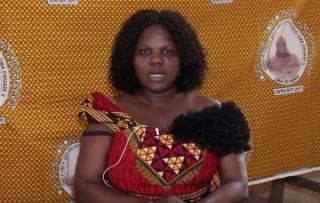
A woman talking about Pre-Colonial Succession Disputes and Civil Wars in Benin Kingdom
Pre-Colonial Succession Disputes and Civil Wars in Benin Kingdom
Dr. Enibokun Uzebu-Imarhiagbe

Provenance

8 events
Production
1500s
The object was produced by Unknown member(s) of the Igbesamwan guild, Unknown member(s) of the Igun-Ẹrọnmwọn guild and Unknown member(s) of the Igun-Ematon guild in Benin City.
Looted
February 22, 1897 (day approximate) to June 1899 (year approximate)
The object was looted by Ralph Denham Rayment Moor from Benin Kingdom.
Inheritance
September 14, 1909
The object was inherited by Adrienne Moor from Ralph Denham Rayment Moor in London.
Purchase
September 14, 1909 to December 1909
The object was purchased by John Sparks from Adrienne Moor in London.
Purchase
September 14, 1909 to December 1909
The object was purchased by Charles Gabriel Seligman from John Sparks in London.
Purchase
May 13, 1910
The object was purchased by the British Museum from Charles Gabriel Seligman in London.
Exhibition
1970 to 1973
The object was exhibited at London.
Exhibition
sometime in 1993 to sometime in 1997
The object was exhibited at London.

Related archival documents

222 documents
See all
Museum Catalogue
Staatsbibliothek zu Berlin
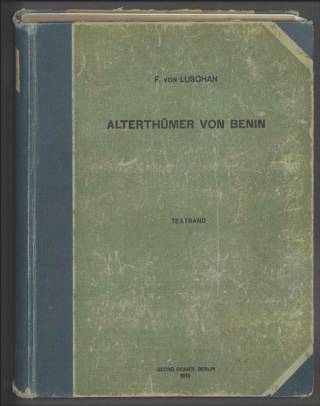
Die Altertümer von Benin
Date
January 1, 1919 at 12:00:00 AM
An archival document representing a Files  of 1 page(s)
FileCorrespondence
The National Archives, Kew
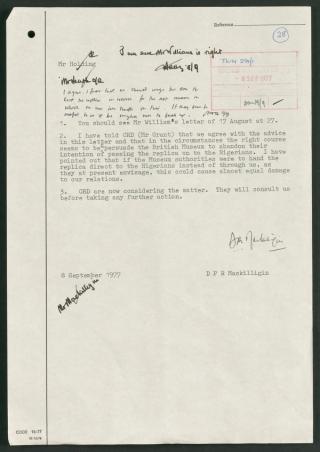
Antiquities of Nigeria, including Benin Ivory Mask
Date
September 8, 1977
An archival document representing a Files  of 2 page(s)
FileCorrespondence
The National Archives, Kew
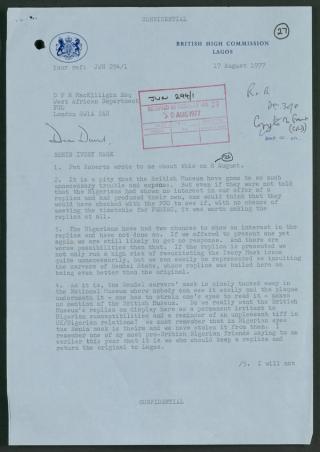
Antiquities of Nigeria, including Benin Ivory Mask
Date
August 17, 1977

Institution data

British Museum
The data was transferred directly by the institution.
Last updated: 2025-06-10
Language: english
Institution fieldValue
Registration number
object id
Af1910,0513.1
PRN
object id
EAF15200
Object Type
designation
pendant-mask ~regalia
Description
description
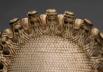
Pendant mask; regalia; carved from ivory. In form of naturalistic human face. Hairstyle carved in low relief; head crowned with circlet of European heads inlaid with copper alloy. Decorative pierced lattice-work ruff below chin inlaid with copper alloy; series of suspension loops around outside. Two vertical bars incised into forehead inlaid with iron. Four scarification marks carved above each eye. Iron inlay around eyes; pupils inlaid wth iron. Two suspension loops on each side of face.
Ethnic name (made by)
ethnic attribution
Edo
Date
16thC
Production place
production place
Made in: Benin City
Findspot
place collected
Found/Acquired: Benin City
Materials
material
elephant ivory ~iron ~copper alloy
Technique
production technique
carved ~inlaid
Dimensions
dimensions
Height: 24.50 cm~Width: 12.50 cm~Depth: 6.00 cm
Curator’s comments
provenance
This is one of five stylistically similar ivory hip-pendants that were produced specifically for the use of the Oba during the sixteenth century. Three of the other masks of this type are in public collections in the UK and the USA. They are recorded as being found in a cache in the bedchamber of the Oba in Benin City and were looted during the British of 1897. These hip-pendants are thought to represent Queen Mother Idia, the mother of Oba Esigie (c.1504-1550), celebrated as one of the great ‘warrior kings’, who ruled in the sixteenth century. Esigie created the title of Queen Mother in honour of Idia and in gratitude for her efforts in supporting his military campaigns. These pendants are widely considered as some of the finest ivory carvings in the Benin corpus. They are also among the most enduring and emotive examples of the representation of women in Benin court art. ; This type of mask was worn by the Oba, on the hip, during important ceremonies. The mask is said to represent Idia, mother of Oba Esigie who ruled in the sixteenth century. The top of the hip mask is decorated with heads representing the Portuguese, symbolizing Benin's alliance with and control over Europeans. The Portuguese continued to appear in Benin art long after they had disappeared from Benin itself. P. Girshick Ben-Amos, The Art of Benin (London, The British Museum Press, 1995)
Bibliographic references
bibliography
Barley 2010: Fig.72; pp.102-3~Fagg 1970: ~Read 1910: p.50; plate D~Read & Dalton 1899:
Exhibition history
exhibition history
Exhibited: 1970-1973, London, Museum of Mankind, Divine Kingship in Africa 1993-1997, London, Museum of Mankind, Great Benin: a West African Kingdom
Associated events
event
Associated Event: British to Benin City - Feb 1897
Acquisition name (acquisition)
provenance
Prof Charles Gabriel Seligman
Acquisition name (excavator)
provenance
Field Collection by: Sir Ralph Moor
Acquisition date
accession date
1910.0
Acquisition notes (excavation)
provenance
Looted by Ralph Moor, Commissioner and Consul-General of the Niger Coast Protectorate, during British to Benin City in 1897.
Sensitive Content

Digital Benin collates digital material from institutions, and some of this material is inherently colonial and contains words, terms and phrases that are inaccurate, derogatory and harmful towards African and African diasporic communities. Catalogue transcriptions, book titles, exhibition titles and museum titles may contain harmful terms. We recognise the potential for the material to cause physical and mental distress as well as evoke strong emotions. Owing to the scale of the collection’s data, a process to implement sensitive-content warnings in the displayed data is still incomplete. The material within the catalogue does not represent Digital Benin’s views. Digital Benin maintains a strong anti-colonial, anti-racist position and affirms its support for centring the humanity of historically marginalised and disenfranchised communities. Read more about the background of this statement here