


Provenance
Institution data
| Institution field | Value |
|---|---|
Inventory number object id | LG1952.32.2 |
URL weblink | https://digitalbenin.org/catalogue/37_LG1952322 |
Object Description description | Uhunmwu-Ẹkuẹ (pendant masks) is a general term, however each mask has a different name depending on the subject depicted. For example, if an Uhunmwu-Ẹkuẹ depicted Iy’ọba Idia it would be called ‘Uhunmwun-Idia’. Uhunmwu-Ẹkuẹ are one of the best-known categories of Benin artworks. A range of human and animal heads are depicted, hence the term ‘mask’, although they were not used to cover the face. Sometimes known as ‘hip masks’, they may be worn on the belt or hung at the hip as seen cast on relief plaques and in the carved motifs on altar tusks. Many pendant masks have a series of eyelets around the edge of the lower portion, to which small crotal bells were attached, and as the wearer moved they would have chimed. The material – ivory or brass – and the iconography depicted were important factors in who was able to wear the masks and why. For example, leopard-head pendant masks may be worn by warriors and those involved in the military, and ivory masks only by the high-ranking Ezomo or Iyase (Blackmun in Plankensteiner, 2007, p.363). Meanwhile, brass crocodile-head pendant masks were the preserve of the Ọba, and he wore them in a set of three along the front of his belt (Blackmun in Plankensteiner, 2007, p.365). Oftentimes, pendant masks also depict human faces, usually but not always, male. Although scholars do not agree, it has been argued these may depict the Ọba, or perhaps defeated chiefs (Blackmun in Plankensteiner, 2007, pp.358, 362). The faces of Portuguese men are also identifiable by their straight hair and beards, and attest to the importance of relationships between the Benin Kingdom and Portugal in the 16th century. The beautiful Queen Idia pendant masks, carved in ivory and which went on to become emblematic of FESTAC ‘77, are the notable exception to the predominantly male depictions on pendant masks. |
Diameter dimensions | |
Dimension L (cm) dimensions | 16.0 |
Dimension W (cm) dimensions | 9.7 |
Dimension H (cm) dimensions | 5.0 |
Brief Object Description designation | Leopard head pendant mask |
Material material | brass |
Object Count object count | 1 |
Date Made date made | |
Associated Guild producer | Igun Ẹrọnmwọn |
Production Technique production technique | Casting |
Production Place production place | Benin City |
Inscriptions inscriptions | |
Note | |
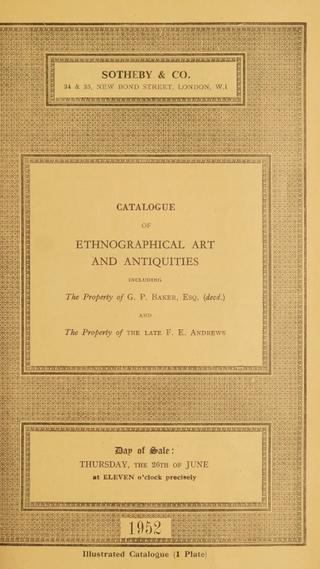
Inventory Book Description | Bronze leopard mask from Benin. Purchased by the Nigerian government from Messrs. Sotheby & Co. 34-5 New Bond Street, London, being lots of 24 through M. B.E.B. Fagg, assistant surveyor of antiquities, bought at a sale on 26th of June, 1952. Lots owned by Neville. |
fileNames | LG1952322_1.jpg, LG1952322_2.jpg |
| Institution field | Value |
|---|---|
Inventory No object id | LG 1952. 32. 2 |
Department of Antiquities Nigerian Museum Catalogue provenance | Purchased by the Nigerian government from Messrs. Sotheby & Co. 34-5 New Bond Street, London, being lots of 24 through M. B. E. Fagg, assistant surveyor of antiquities, bought at a sale on 26th of June, 1952. Bronze leopard mask from Benin 110 £. Lots owned by Neville according to catalogue. |
Object Name (as specified in the 2019 Lagos National Museum store/gallery inventory) | Benin bronze leopard head pendant. |
Digital Benin collates digital material from institutions, and some of this material is inherently colonial and contains words, terms and phrases that are inaccurate, derogatory and harmful towards African and African diasporic communities. Catalogue transcriptions, book titles, exhibition titles and museum titles may contain harmful terms. We recognise the potential for the material to cause physical and mental distress as well as evoke strong emotions. Owing to the scale of the collection’s data, a process to implement sensitive-content warnings in the displayed data is still incomplete. The material within the catalogue does not represent Digital Benin’s views. Digital Benin maintains a strong anti-colonial, anti-racist position and affirms its support for centring the humanity of historically marginalised and disenfranchised communities. Read more about the background of this statement here