








Iconographies






Provenance
Institution data
| Institution field | Value |
|---|---|
Additional IDs object id | 14378; 14379 |
Reg. No. object id | 1907.44.0380 |
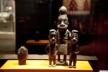
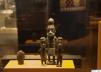
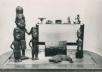
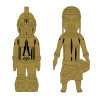
Object name and description designation description | Cast copper alloy figure group of a dignitary and two attendants. |
Dimensions dimensions | H. 31,2 cm X. 19 cm |
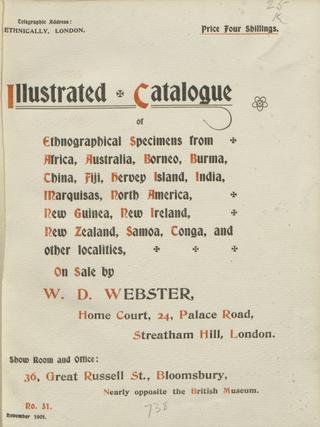
Collector/previous owner prior source | William Downing Webster |
Acquisition details provenance | Donated by Hans Meyer |
Institution department and institution | NMWC-Sweden |
Institution acquisition date accession date | 1907 |
Comments notes | British Military Expedition to Benin City 1897 |
| Institution field | Value |
|---|---|
Inventarienummer object id | 1907.44.0380 |
Inventarienummer, tidigare object id | 14379; 14378 [märkning på skulpturen] |
Lokalt namn edo designation | |
Sakord designation object type | statyett |
Beskrivning description | Männsikofigur liten, av brons, sittande i en stol. (generalkatalogen) Utställningstext STADEN: Figurgrupp avbildande en dignitär med sina två följeslagare. Sent 1800-tal. ; (14379) i brons av 3 människör. (Konung och två slavar). Höjd: 31.2 cm. Bredd: 19 cm. Benin [ocr] Beskrivning - engelska dignitary and two attendants |
Beskrivning - engelska description | |
Object-Description description | Männsikofigur liten, av brons, sittande i en stol. (generalkatalogen) Utställningstext STADEN: Figurgrupp avbildande en dignitär med sina två följeslagare. Sent 1800-tal. (14379) i brons av 3 människör. (Konung och två slavar). Höjd: 31.2 cm. Bredd: 19 cm. Benin |
Publicerad text description | Utställningstext STADEN 1998, Benin City: "DÄR KUNGEN AV NÅD RÅDER ÖVER LIV OCH DÖD" Kungariket Benin ligger i den tropiska regnskogen i södra Nigeria. Majoriteten av dess befolkning är kända som edo, men också grupper av ibo, ijaw, yoruba och itsekiri bor inom rikets gränser. Kungarikets hjärta är dess huvudstad, som förr hette Edo men idag kallas Benin City. Utanför huvudstaden lever det jordbrukande folket i flera hundra byar under sina äldstes ledarskap. Benins kulrurrikedomar blev kända för västvärlden 1897 genom brittisk straffexpedition riktad mot Benin City, då tusentals konstverk från det kungliga palatset beslagtogs och senare spreds till museer och privatsamlingar över hela världen. Det är en kunglig konst som skapats för att förhärliga den gudomlige kungen, Oba, och hans föregångare. Också idag sitter en gudomlig kung, Oba Erediauwa, på tronen i Benin och styr över ett hängivet hov, över storslagna palatsritualer och över livaktiga konstnärsskrån. Detta sammantaget gör Benin City till ett religiöst och rituellt centrum och i kraft av kungamakten till en stad av gudomlig inspiration. "HÖGSÄTET FÖR OBA - HIMLENS UTVALDE" Benin City, i dagens Nigeria hem för omkring 200 000 människor, har alltid varit kungariket Benins administrativa och religiösa centrum, något som också avspeglar sig i dess uppbyggnad. Stadens kärna omges av en dikerad lerjordsmur som enligt traditionen skall ha anlagts av den sittande Oban vid mitten av 1400-talet. Området inom denna ringmur delas i två sektioner av en bred gata, där den mindre sektionen i sydväst inrymmer kungliga palatset och de olika palatssällskapens och palatschefernas hem, medan den större sektionen nordöst om skiljegatan bebos av stadscheferna och alla yrkesspecialister som arbetar för kungen, såsom de olika konstnärsskråna. Bortom denna inre mur sträcker sig en yttre mur, som inringar det område där kungens många rituella funktionärer bor. Inom den yttre muren ligger också de byar som styrs av Uzama, de mest uppburna hövdingarna i Benin med ansvar för de ritualer som skall trygga hela rikets välbefinnande. Just utanför den yttre muren ligger sedan drottningmoderns och tronföljarens båda palats. Så åskådliggör stadens själva planläggnning den gudomlige kungens centrala position, liksom motsatsförhållandet mellan palatschefer och stadschefer och Uzamas speciella ställning. Det kungliga palatset, en vidsträckt anhopning av byggnader och gårdar, är rikets och stadens hjärtpunkt, varifrån den andliga kraft emanerar som är så avgörande för hela rikets hälsa och välgång. Där i centrum av centrum förvaras också de kungliga förfadersaltarna med sina bronshuvuden, utsirade elefanbetar, klockor och andra föremål, som alla har en roll att spela i tillbedjan av de kungliga förfäderna och den jord i vilken de är begravda. |
Publicerad text- engelska description | Freestanding figure depicting a Benin dignitary with his two attendants. Late 19th century. (Staden-Benin) |
Material - tillverkning material | brons |
Material- engelska - tillverkning material | bronze |
Materialkategori material | metall |
Bredd dimensions | 19 cm |
Diameter dimensions | |
Djup dimensions | |
Höjd dimensions | 31,2 cm |
Längd dimensions | |
Tjocklek dimensions | |
Klassifikation, OCM (bred) object type | Utrustning och skötsel av byggnader (350) |
Klassifikation, OCM (smal) object type | Heminredning och möblering (353); Hovstat (644) |
Motivord iconography | |
Motivord, engelska iconography | |
Tidpunkt - tillverkning, tidigast date made | |
Teknik - tillverkning production technique | gjutet |
Geografiskt namn - annat production place | Västafrika |
Land - ursprung production place | Nigeria : Afrika |
Land- engelska - ursprung production place | Nigeria |
Ort - ursprung production place | Benin City |
Region - ursprung production place | Edo state |
Sakord, engelska production place | figure group |
Sökord production place | Kungadömet Benin; Royal Benin |
Belongs to Samling provenance | 1907.44 :: Meyer, Hans |
Namn - byte från provenance | |
Namn - förvärvat från/0 provenance | Meyer, Hans Beskrivning Hans Meyer, född den 22 mars 1858 i Hildburghausen, död den 5 juli 1929 i Leipzig, var en tysk förläggare och forskningsresande, son till Herrmann Julius Meyer, bror till Hermann Meyer. Meyer övertog, sedan han promoverats till filosofie doktor, jämte sin bror Arndt Meyer 1886 ledningen av "Bibliographisches Institut". Han var ledamot av tyska kolonialrådet sedan 1901, juris och filosofie hedersdoktor samt innehavare av professors namn och geheimehovråd. Under hans chefstid utvidgades förlaget med bland annat "Meyers Volksbücher", "Meyers Sprachführer", Sievers "Allgemeine Länderkunde", en serie litteraturhistorier med mera. Meyer företog ett stort antal vidsträckta resor, bland annat till Sydafrika, var den förste, som besteg Kilimandjaros högsta topp, och studerade 1903 Ecuadors glaciärer. Han skildrade sina färder i Zum Schneedom des Kilimandscharo (1888), Ostafrikanische Gletscherfahrten (1890), Die Insel Tenerife (1896), Der Kilimandjaro (1900), Die Eisenbahnen im tropischen Afrika (1902), Reisen im hochland von Ecuador (1904) och Die Eiszeit in den Tropen (samma år). (Wikipedia, 2015-02-26) Hans Meyer, professor, mecenat och samlare, Leipzig. Han har donerat föremål från bland annat Benin till Etnografiska museet, Stockholm. För detta fick han Nordstjärneorden. (Vem tillhör föremålen, s. 30) |
Namn - insamlare provenance | |
Namn - ägare provenance | |
Händelse - var närvarande vid event | |
Etnisk grupp - ursprung ethnic attribution | edo |
Tidpunkt - förvärv till museet accession date | 1907 |
Förvärvsomständigheter - i fält accession method | |
Förvärvsomständigheter - till museet accession method | |
Anmärkning notes | |
Utlån - planerat exhibition history | |
Utlån - tidigare exhibition history | 1959.0001, Sundsvalls museum 1959-02-19 Utställning - lån Afrikansk konst |
Utställning - ingår i exhibition history | Med världen i Kappsäcken 2002-10-26, 2009-11-06, 2009-05-19 |
Utställning - planerad exhibition history | |
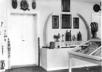
Utställning - tidigare exhibition history | Afrikas folk 1926-03 - 1927-04 Exotisk konst och konsthantverk 1927-01-08 - 1927-01-31 Staden - speglingar av kosmos 1998-09-10 |
Utställning, del av - ingår i exhibition history | Med världen i kappsäcken 11, Vem tillhör föremålen? Konstskatter från kungariket Benin |
Utställning, del av - planerad exhibition history | |
Utställning, monterdel - planerad exhibition history | |
Utställning- del av - tidigare exhibition history | Staden Benin |
Källor bibliography | |
Referens - publicerad i bibliography | |
Tillståndsbedömning condition | |
Tillståndsbedömning - Lista condition | |
Delar | A-B |
Image/byline | Barkman, Lars-Erik; Hofer, Adolf; Lundquist, Amanda; Manker, Ernst Mauritz; Ohlson, Bengt; Sandin, Tony; Uppgift om fotograf saknas; Wallberg, Karl; Westling, Rose-Marie |
Image/copyright | Statens museer för världskultur; Utgången upphovsrätt |
Image/mediaLicenseUrl | http://creativecommons.org/licenses/by/2.5/; http://creativecommons.org/licenses/by-nc-nd/2.5/; http://creativecommons.org/publicdomain/mark/1.0/ |
Inlån - aktuellt | |
Inventeringsstatus | |
Månad - Månadens föremål | |
Namn - förvärvat från/1 | |
Namn - förvärvat från/2 | |
OWC - ursprung | FF1; FF3; FF21 |
Object-Title | 1907.44.0380 :: statyett |
Specialbenämning | |
URL | https://collections.smvk.se/carlotta-em/web/object/1238789 |
Ursprungsdatabas | Etno |
Vecka - Veckans föremål | |
Världsdel - ursprung | Afrika |
Världsdel- engelska - ursprung | Africa |
Digital Benin collates digital material from institutions, and some of this material is inherently colonial and contains words, terms and phrases that are inaccurate, derogatory and harmful towards African and African diasporic communities. Catalogue transcriptions, book titles, exhibition titles and museum titles may contain harmful terms. We recognise the potential for the material to cause physical and mental distress as well as evoke strong emotions. Owing to the scale of the collection’s data, a process to implement sensitive-content warnings in the displayed data is still incomplete. The material within the catalogue does not represent Digital Benin’s views. Digital Benin maintains a strong anti-colonial, anti-racist position and affirms its support for centring the humanity of historically marginalised and disenfranchised communities. Read more about the background of this statement here