

Provenance
Institution data
| Institution field | Value |
|---|---|
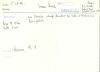
Identifikationsnummer object id | C 2874 |
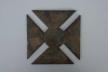
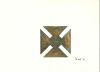
Titel designation | Bronzekreuz |
Materialien material | ANORGANISCH/Metall/Gelbguß |
Heutiges Staatsgebiet des Herstellungsortes production place | Afrika/Westafrika/Nigeria |
Provenienz/Name prior source provenance | Webster |
Provenienz Objektitinerar Akteure Orte Daten provenance | W. D. Webster |
Provenienz/Affiliation provenance | W. D. Webster |
Provenienz/Country provenance | United Kingdom |
Provenienz/Date of Birth provenance | 11.05.1868 |
Provenienz/Date of Death provenance | 14.01.1913 |
Provenienz/First Name provenance | William Downing |
Provenienz/No provenance | 40 |
Provenienz/Place of Birth provenance | unknown |
Provenienz/Place of Death provenance | unknown |
Provenienz/Profession provenance | Ethnographica Dealer |
Provenienz/Role-Function/0 provenance | Consignor |
Provenienz/Role-Function/1 provenance | Intermediary |
Provenienz/Sex provenance | male |
Provenienz/Short Biography provenance | William Downing Webster (1868-1913) was a well-known British ethnographica dealer from whom almost all major ethnographic collections in Great Britain and continental Europe acquired Benin pieces. In addition to a donation, the MARKK’s Benin collection today contains twelve objects that were purchased from Webster in 1900/1901. |
Provenienz/Street provenance | |
Provenienz/Town provenance | London |
Hersteller kulturhist. Herkunftsgesellschaft ethnic attribution | --/Edo ? |
Heutiger Aufbewahrungsort Sammlung department and institution | Museum am Rothenbaum. Kulturen und Künste der Welt (MARKK) |
Akquisitionsdatum accession date | 1900 |
Alte Inventarnummer | |
Inventurdatum | 16.07.2009 |
Label Text (deu) | Kreuz Unbekannte Werkstatt / Königreich Benin (?), Nigeria, 16./17. Jh. / Kupfer / Ankauf von W. D. Webster, 1900, Inv. Nr. C 2874 Die Herkunft und Funktion des flachen Kreuzes in Form eines Malteserkreuzes – ein Kurator des Museums im frühen 20. Jh. nannte es Hanseatenkreuz – sind nicht bekannt. Im 15. Jh. erzählte man portugiesischen Besuchern, dass jeder neu gekrönte König von einem Herrscher im Osten Insignien erhielt, worunter sich ein Kreuz befand. Ein Wechsel der Machtverhältnisse führte wohl Mitte des 16. Jhs. zur Aufgabe dieser Praxis. In der Ikonografie der Benin-Kunst kommen Malteserkreuze vielfach vor, sie werden mit Oba Esigie assoziiert. |
Label Text (eng) | Cross Unidentified workshop / Benin Kingdom (?), Nigeria, 16th/17th century / Copper/ Acquired from W. D. Webster in 1900, Inv. no. C 2874 The origin and function of the flat cross in the shape of a Maltese cross – a curator of this museum in the early 20th century referred to it as Hanseatic cross – are not known. In the 15th century, Portuguese visitors were told that every newly crowned king received a set of regalia from a ruler in the East, which included a cross. A shift in power relations might have led to the abandonment of this practice in the mid-16th century. Maltese crosses appear frequently in the iconography of Benin art and are associated with Oba Esigie. |
Maße | Höhe: 13,00 cm; Breite: 13,00 cm; Tiefe: 0,60 cm |
Digital Benin collates digital material from institutions, and some of this material is inherently colonial and contains words, terms and phrases that are inaccurate, derogatory and harmful towards African and African diasporic communities. Catalogue transcriptions, book titles, exhibition titles and museum titles may contain harmful terms. We recognise the potential for the material to cause physical and mental distress as well as evoke strong emotions. Owing to the scale of the collection’s data, a process to implement sensitive-content warnings in the displayed data is still incomplete. The material within the catalogue does not represent Digital Benin’s views. Digital Benin maintains a strong anti-colonial, anti-racist position and affirms its support for centring the humanity of historically marginalised and disenfranchised communities. Read more about the background of this statement here