Identifikationsnummer
C 2425
Edo designations
English designations
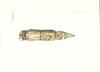
Queen Mother Figure
Categories
Figures
Location
1 Adesogbe (Plymouth) Road, P.M.B. 1115, Benin City , Edo State
Loading...
Queen Mother Figure
Queen Mother Figure
Queen Mother Figure
Queen Mother Figure
Queen Mother Figure

Iconographies

3 annotations
tribal marks
Iwu
Facial and Body Markings

Iwu are facial and body markings (scarifications) that were historically worn by Edo men and women. However, since the 1960s, the practice has been nearly extinct (Aisien 2011). In the past, Iwu were used as a way of proving that one was an Edo citizen, and the ceremony of having Iwu completed was an important rite of passage for men and women. The Osiwu, who also practised circumcision and other surgical procedures, would carry out the procedure of adding Iwu. There are different types of Iwu: ‘blades’ worn on the torso (Iwu-eko), and those worn on the face, such as Ikharo (three or four markings above the eyebrows), Irho (two narrow ‘blades’ worn on each cheek), Ovbihue (nasal ‘blades’), Ovbi-agbanmwen (chin ‘blade’), and Igho-okpa/Ukpgho (three forehead ‘blades’) (Aisien 2011, p. 22).

The number of Iwu also varied depending on the identity of the person wearing them. For example, royal men would wear six ‘blades’ on their torso, whilst men who were not royal would wear seven ‘blades’. Meanwhile, the Ọba’s female children would wear fifteen ‘blades’, and all other women would wear sixteen (Aisien 2011).

1 annotation
Iwu
Iy'Ọba
Queen Mother

In the 16th century, Ọba Ẹsigie established the title of Iy'Ọba (Queen Mother) in honour of his mother, Iy'Ọba Idia, for the crucial role she played in the Benin–Idah War (1515–16). She is often described as “the only woman who went to war” ( ).

The Iy'Ọba can usually be identified by her distinctive curved, conical hairstyle, known as Ukpẹ ọkhọkhọ, which is said to have been introduced by Iy'Ọba Idia (Kaplan 1993, p. 58). In addition, the Iy'Ọba was permitted to wear certain items of attire otherwise reserved for the Ọba, such as the Ewu ivie (coral-beaded shirt) and Ukpan obọ eva (crossed coral-beaded baldrics), as well as regalia associated with senior chiefs, including the Odigba (coral-beaded collar) and Udahae (coral-beaded forehead band) ( ).

Representations of the Iy'Ọba appear on ivory Emwin Arhe (royal treasures), including the five famous Uhunmwu-Ẹkuẹ (pendant masks) believed to depict Iy'Ọba Idia, as well as on a number of Aken'ni Elao (carved altar tusks). She is also represented in brass and bronze, including on Ikẹgobọ (altars to the hand) and Urhotọ (altar tableaux) made for Iy'Ọba shrines and altars ( ). In these representations, the Iy'Ọba is often accompanied by female attendants who form part of her retinue.

1 annotation
Iy'Ọba
Ukpẹ ọkhọkhọ
Curved conical hairstyle worn by Iy'Ọba

The Ukpẹ ọkhọkhọ is a distinctive hairstyle and coral-beaded headdress worn by the Iy’Ọba. The headdress includes a projection called the ‘ede Iy’Ọba’, which indicates that “her spiritual potentialities are closer in quality to those of her ruling son than they are to the powers of the nobles” (Aigbe Eson and Ihama Iguneronmwon in Blackmun 1991, p. 60). The Iy’Ọba’s hairstyle and headdress are meant to resemble ukpe-okhue, or the curved parrot’s beak (Kaplan 1993).

Barbara Blackmun (1991, p. 60) argued that “Benin art is multivocal, and any depiction of the Iye Ọba [sic] is a reference to Idia. Every woman who holds the office of lye Ọba plays the part of Idia, the ideal model of an Ọba’s mother.” Wearing the Ukpẹ ọkhọkhọ is one of the ways the Iy’Ọba plays the role of Idia.

1 annotation
Ukpẹ ọkhọkhọ

Provenance

1 events
Restitution
December 16, 2022
The object was restituted by the MARKK Museum am Rothenbaum Kulturen und Künste der Welt to the Omo n'Oba n'Edo Uku Akpolokpolo, Ọba of Benin & National Commission for Museums and Monuments, Nigeria through Carsten Brosda, S.E. Yusuf Maitama Tuggar, Abba Isa Tijani and Barbara Plankensteiner from Hamburg to Nigeria.

Institution data

MARKK Museum am Rothenbaum Kulturen und Künste der Welt
The data was transferred directly by the institution.
Last updated: 2022-06-10
Languages: german, english
Institution fieldValue
Identifikationsnummer
object id
C 2425
Titel
designation
Elfenbeinfigur einer Iyoba
Materialien
material
ORGANISCH/ TIERISCH/Elfenbein
Heutiges Staatsgebiet des Herstellungsortes
production place
Afrika/Westafrika/Nigeria/Benin-Reich
Provenienz/Name
prior source
provenance
Brinckmann
Provenienz Objektitinerar Akteure Orte Daten
provenance
Museum für Kunst und Gewerbe Hamburg
Provenienz/Affiliation
provenance
Museum für Kunst und Gewerbe Hamburg
Provenienz/Country
provenance
Germany
Provenienz/Date of Birth
provenance
23.5.1843
Provenienz/Date of Death
provenance
08.02.1915
Provenienz/First Name
provenance
Justus
Provenienz/No
provenance
6
Provenienz/Place of Birth
provenance
Hamburg
Provenienz/Place of Death
provenance
Hamburg
Provenienz/Profession
provenance
Art Historian, Museum Director
Provenienz/Role-Function/0
provenance
Intermediary
Provenienz/Role-Function/1
provenance
Provenienz/Sex
provenance
male
Provenienz/Short Biography
provenance
Justus Brinckmann (1843-1915) was the first director of the Museum für Kunst und Gewerbe in Hamburg and in 1874 was the leading figure in its foundation.
Provenienz/Street
provenance
Steintorplatz 1
Provenienz/Town
provenance
Hamburg
Hersteller kulturhist. Herkunftsgesellschaft
ethnic attribution
--/Edo
Heutiger Aufbewahrungsort Sammlung
department and institution
Museum am Rothenbaum. Kulturen und Künste der Welt (MARKK)
Akquisitionsdatum
accession date
1899
Alte Inventarnummer
Inventurdatum
10.07.2009
Label Text (deu)
Figur einer Iyoba Unbekannte Werkstatt der Elfenbeinschitzergilde Igbesanmwan, Königreich Benin, Nigeria, 17./18. Jh. / Elfenbein / Ankauf vom Museum für Kunst und Gewerbe Hamburg, 1899, Inv. Nr. C 2425 Der leicht geschwungene konische Kopfputz der verwitterten Figur weist diese als Königinmutter von Benin aus. Solche Elfenbeinskulpturen hatten angesetzte Arme, die hier verloren gegangen sind. Sie wurden wohl auf Ahnenaltären aufgestellt.
Label Text (eng)
Figure of an Iyoba Unidentified workshop of the Ivory Carvers Guild Igbesanmwan / Benin Kingdom, Nigeria, 17th/18th century / Ivory / Acquired from the Museum für Kunst und Gewerbe Hamburg, 1899, Inv. no. C 2425 The slightly curved conical headdress of the weathered figure identifies it as the queen mother of Benin. Such ivory sculptures had attached arms, which have been lost here. They were probably placed on ancestral altars.
Maße
Höhe: 46,50 cm; Breite: 8,60 cm
Sensitive Content

Digital Benin collates digital material from institutions, and some of this material is inherently colonial and contains words, terms and phrases that are inaccurate, derogatory and harmful towards African and African diasporic communities. Catalogue transcriptions, book titles, exhibition titles and museum titles may contain harmful terms. We recognise the potential for the material to cause physical and mental distress as well as evoke strong emotions. Owing to the scale of the collection’s data, a process to implement sensitive-content warnings in the displayed data is still incomplete. The material within the catalogue does not represent Digital Benin’s views. Digital Benin maintains a strong anti-colonial, anti-racist position and affirms its support for centring the humanity of historically marginalised and disenfranchised communities. Read more about the background of this statement here