

Iconographies



Provenance
Institution data
| Institution field | Value |
|---|---|
Identifikationsnummer object id | C 2340 |
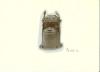
Titel designation | Gedenkkopf eines Königs (uhunmwun elao) |
Materialien material | ANORGANISCH/Metall/Gelbguß |
Heutiges Staatsgebiet des Herstellungsortes production place | Afrika/Westafrika/Nigeria/Benin-Reich |
Provenienz/Name prior source provenance | Blech |
Provenienz Objektitinerar Akteure Orte Daten provenance | J. F. Blech |
Provenienz/Affiliation provenance | Port of Hamburg (?) |
Provenienz/Country provenance | Germany |
Provenienz/Date of Birth provenance | unknown |
Provenienz/Date of Death provenance | unknown |
Provenienz/First Name provenance | J. F. |
Provenienz/No provenance | 3 |
Provenienz/Place of Birth provenance | unknown |
Provenienz/Place of Death provenance | unknown |
Provenienz/Profession provenance | (Dock) worker |
Provenienz/Role-Function/0 provenance | Consignor |
Provenienz/Role-Function/1 provenance | |
Provenienz/Sex provenance | male |
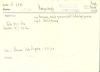
Provenienz/Short Biography provenance | J. F. Blech appears in the Hamburg address book of 1898 as “Arbtr.” (= worker) and most likely did not tralvel to Africa himself. His full name is not known. Most likely, Blech was a dock worker and, in this way, probably acquired ethnographic objects, including two works of art from the Kingdom of Benin, which he sold to the museum in 1898. |
Provenienz/Street provenance | Neumannstr. 5 |
Provenienz/Town provenance | Hamburg |
Hersteller kulturhist. Herkunftsgesellschaft ethnic attribution | --/Edo |
Heutiger Aufbewahrungsort Sammlung department and institution | Museum am Rothenbaum. Kulturen und Künste der Welt (MARKK) |
Akquisitionsdatum accession date | 1898 |
Alte Inventarnummer | |
Inventurdatum | 23.07.2015 |
Label Text (deu) | Gedenkkopf eines Königs Uhunmwun Elao Unbekannte Werkstatt der Bronzegießergilde Igun Eronmwon / Königreich Benin, Nigeria, 19. Jh. / Gelbguss / Ankauf von J. F. Blech, 1898, Inv. Nr. C 2340 Nur dem König und der Königinmutter war es gestattet ihre Ahnenaltäre mit Köpfen aus Gelbguss auszustatten. Die formalisierten, massiven Köpfe, die eine Perlenkrone mit seitlichen Flügeln tragen, werden in das 19. Jh. datiert. Der Überlieferung nach soll dieser Kronentyp von Oba Osemwende, der 1816 den Thron bestieg, eingeführt worden sein. Bis heute trägt der Oba eine Korallenperlenkrone dieser Art als Teil seines Krönungsornats. Die Köpfe dienten als Ständer für schwere beschnitzte Stoßzähne. Anhand der erhaltenen Königsköpfe wurde eine stilistische Chronologie der Benin-Kunst erarbeitet. Dieser zufolge gelten jene mit dem feinsten Guss und einer naturalistischen Gestaltung als ältere und die stilisierten, dickwandigeren als jüngere. |
Label Text (eng) | Commemorative Head of a King Uhunmwun Elao Unidentified workshop of the Bronze Casters Guild Igun Eronmwon / Benin Kingdom, Nigeria, 19th century / Brass / Acquired from J. F. Blech, 1898, Inv. no. C 2340 Only the king and the queen mother were entitled to furnish their ancestral altars with bronze heads. The formalized, massive royal heads with a winged beaded crown dates back to the 19th century. According to oral tradition, this type of crown was introduced by Oba Osemwende, who ascended the throne in 1816. To this day, the Oba wears a coral bead crown like this one, as part of his coronation regalia. The heads also served as stands for heavy carved tusks. The existing royal heads with their variations allowed to identify a stylistic chronology of Benin art. According to this, those with the finer cast and more naturalistic style are considered older and the stylized, thickerwalled examples more recent. |
Maße | Höhe: 47,50 cm; Durchmesser: 32,00 cm |
Digital Benin collates digital material from institutions, and some of this material is inherently colonial and contains words, terms and phrases that are inaccurate, derogatory and harmful towards African and African diasporic communities. Catalogue transcriptions, book titles, exhibition titles and museum titles may contain harmful terms. We recognise the potential for the material to cause physical and mental distress as well as evoke strong emotions. Owing to the scale of the collection’s data, a process to implement sensitive-content warnings in the displayed data is still incomplete. The material within the catalogue does not represent Digital Benin’s views. Digital Benin maintains a strong anti-colonial, anti-racist position and affirms its support for centring the humanity of historically marginalised and disenfranchised communities. Read more about the background of this statement here