



Identifikationsnummer
C 2338
Edo designations
English designations
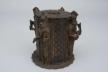
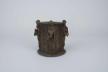
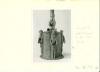
Altar of the Hand
Categories
Altar & Shrine Objects
Location
1 Adesogbe (Plymouth) Road, P.M.B. 1115, Benin City , Edo State
Loading...
Altar of the Hand
Altar of the Hand
Altar of the Hand
Altar of the Hand
Altar of the Hand
Altar of the Hand
Altar of the Hand

Iconographies

10 annotations
Ubanu'hi / Obanu'hi
Ubanu'hi / Obanu'hi
Inifinity Symbol

The Ubanu'hi (infinity symbol) is a kind of guilloche or interlaced strapwork motif that can be angular or rounded. It was used by Edo artists in the decoration of many Emwin Arhe (royal treasures) and is ubiquitous in Benin royal arts. Ubanu'hi is a shortened form of “uba no Ọba ya de agbon ke ehimwin yi”, which means “the rope with which the Ọba ties the heaven and earth together” (pers. comm. Chief John Igbineweka Inneh n’Igbesawman, 2022). Similarly, Paula Ben-Amos Girshick (in Plankensteiner 2007, pp. 339, 341) described this as “Ọba n’iri agbon”, or the “rope of the world” pattern.

According to Ọbabanmu Ineh (in Blackmun 1984, p. 51), the use of this motif indicates that objects were carved by members of the Igbesanmwan. However, the motif is found on all types of Emwin Arhe (royal treasures), not only those made of ivory or wood. On the flanges of the Ama (relief plaques) alone, Kathryn Gunsch (2018, pp. 75–77) identified three different versions of the Ubanu'hi and, through her analysis of over 850 plaques, found that these different Ubanu'hi forms align with other characteristics, such as dimensions, the prevalence of ornamental motifs, and stylistic qualities. Together, these provide evidence, she argues, of different production groups among the plaque makers .

Kate Ezra (1992, pp. 209, 264) went on to argue that the use of these motifs indicates that certain objects were used in a “royal context” and were associated with “royal patronage”.

2 annotations
Ubanu'hi / Obanu'hi
Ubanu'hi / Obanu'hi
Colar Bead
Odigba
Coral beaded collar

Odigba (coral-beaded collar) is a rigid neck collar made of coral beads, worn as part of ceremonial attire only by senior princes who have been made Enigie (Inneh 2007, p. 107). Although Ibafe (2007, p. 43) argued that the Odigba was introduced during the Ogiso period (c. 900–c. 1170 AD) by Ogiso Ere, along with other symbolically important Emwin Arhe, such as the Ada (ceremonial sword) and the Ẹbẹn (ceremonial sword), this seems unlikely, as coral was only introduced in the late 15th century through trade with Portuguese merchants.

2 annotations
Odigba
Odigba
hairstyles
Eto
hairstyles

Hairstyles are used to determine a person's status in the society, as chiefs, common folks, chief's wives and the wives of the Ọba all wear different hairstyles. We have Okuku, Ikpe~okhokho, Idu~akpata

1 annotation
Eto
Ahianmwẹ-Ọrọ
Bird of Prophecy

The Ahianmwẹ-Ọrọ, meaning ‘bird of prophecy’ in English, is a bird with a long beak believed to be a messenger of the spirit world. If it cries ‘OyaO’ (disgrace), it portends danger or disaster. If it cries ‘Oliguegue’ (be grateful), it portends good favour, fortune, or luck. If it persistently cries ‘OyaO, OyaO’ in front of someone, it is prophesying that the person should be cautious and should not undertake a journey, or should return home rather than continue. But if the bird cries ‘Oliguegue’ continuously, the journey will be favourable.

In 1515, as Ọba Ẹsigie passed through the gates of Benin on his way to fight the Attah (king) of Idah, the Ahianmwẹ-Ọrọ made discouraging sounds overhead, ‘OyaO, OyaO’, portending that disaster lay ahead. The Ọba ordered the bird to be killed and went on to win the war. He said, ‘Nẹ O gha yin Agbon, ghẹi daho Ahianmwẹ notiẹ oya’ (whoever wishes to succeed in life should not heed the bird of prophecy). On the Ọba’s triumphant return from battle, he commissioned the Igun-Eronmwon to make an image of the bird on the finial of a battle standard to remind it that the Ọba was not subject to the fate of ordinary spirits (personal communication, Patrick Oronsaye, 2022).

The identification of which bird the Ahianmwẹ-Ọrọ represents has been a subject of scholarly debate throughout the 20th century. Some have suggested that the bird is an African pied wagtail (Melzian 1937, p. 5), an ibis (Dark 1962, p. 46), possibly a kind of kingfisher (Ben-Amos 1976, p. 252), a hornbill (McCall 1975, p. 293), or, lastly, a white-tailed ant thrush (Nevadomsky 1988, pp. 76–77). In the case of the Ahianmwẹ-Ọrọ, however, Joseph Nevadomsky (1988, p. 77) posited that the exact species being represented was in fact less important. Instead, the aim was to “convey certain notions about the supernatural powers of the Ọba” and that the physical attribute (e.g., the long beak) was in fact the Ọba Ẹsigie’s casters’ way of seeking to “emphasise its vocal powers of prophecy, and, perhaps more importantly, the overcoming of these powers by the Ọba.”

1 annotation
Ahianmwẹ-Ọrọ
Ẹgogo
Gong

Ẹgogo (gongs) hold significant importance in Benin art and ritual, serving as powerful instruments with both practical and symbolic roles. Ivory gongs, especially “double-bell” types, were highly prized and reserved for the royal court, particularly those made entirely of ivory, which were used exclusively by the Ọba. The whiteness of ivory Ẹgogo symbolises purity and peace and is linked to sacred Orhue (white kaolin chalk) and the deity Olokun (Blackmun 2007, cat. no. 60, p. 315).

When depicted in the imagery of the Emwin Arhe (royal treasures), Ẹgogo are usually held by figures such as the Ọba or high-ranking chiefs, illustrating their historical and ongoing use as idiophones during ceremonies and festivals. The Ọba dances with an ornately carved ivory Ẹgogo during the Emobo festival, which takes place three days after the Iguẹ festival (Ben-Amos 1995, p. 108).

1 annotation
Ẹgogo
Bead
Ivie
Beads

The Benin people use beads as one of their most important ceremonial body ornaments. There are coral and stone beads, which came mostly from long distance trade. The bead workers of Benin kingdom are called Enisen and they specialise in the art of bead making, particularly the royal regalia. Different types of beads are also worn for various ceremonies. The greatest honour anyone can get in Benin kingdom and from the Oba is to be decorated with a bead, the Ikele - a symbol of nobility.

1 annotation
Ivie
snake
Ẹyẹn
Snake

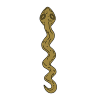
Ẹyẹn (snakes) are among the most common animals depicted by Edo artists on the Emwin Arhe (royal treasures). The varied depictions of these reptiles suggest different snake species, including the Ikpin (python), Arhunmoto (puff adder), and Olose (red-black striped snake); therefore, here we use the generic term for snake: Ẹyẹn.

The identification of snake motifs and depictions as Ikpin, as well as the importance accorded to this species, is a subject of scholarly debate. Paula Ben-Amos (1976, p. 247) argued that the Edo admired the “stature, colouration and crushing power” of the python, which was in turn associated with Olokun. She went on to identify the brass figures of snakes that formerly adorned the roof of the palace, as well as several other snakes, as pythons. Joseph Nevadomsky (1988, p. 77) argued instead that the importance of the Ikpin had been overstated.

Some of these snake representations may in fact be the Arhunmwoto (puff adder). The first to suggest this was the German curator Felix von Luschan (1919) in his early research into the Benin royal treasures. Nevadomsky (1988, pp. 79–80) suggested that the large head, narrow neck, and rough scales are indicative of either the puff adder, a symbol of “material wealth, tribute, and gifts,” or the Gaboon viper.

Another kind of snake that may be depicted is the Olose (red-black striped snake). It has the praise name “king of the snakes” in Edo. Olose is also closely connected to the deity Olokun, both because of its attractiveness and because it inhabits wet environments such as forest streams, which in turn flow into rivers and the sea, where Olokun lives (Nevadomsky 1988, pp. 76–77). Although the exact meanings of these different snakes vary, they share the characteristic of being spiritually powerful creatures.

1 annotation
Ẹyẹn
Ukhurhẹ
Ancestral Staff

Representations of figures, often the Ọba, with an Ukhurhẹ (Ancestral Staff) in their right hand recur in a number of Emwin Arre (royal treasures), particularly those carved in wood as Agba (royal stools), cast in brass as part of Osogan (Osun staffs) and Ikẹgobọ (altars to the hand), and carved in ivory as Aken'ni Elao (carved tusks).

Ukhurhẹ are rattle staffs, usually made from wood, although brass examples are believed to have been owned by the Ọba. Ukhurhẹ were, and continue to be, commissioned when the paternal head of a family passes away as a way of commemorating them ( ). Following a ceremony in which they are installed on the family’s ancestral altar, Ukhurhẹ are typically lined up against the back of the altar and are used to communicate with ancestors and the spirit world. When depicted on the Emwin Arhe, Ukhurhẹ are usually held in the right hand of the Ọba, while an Ughavan (celts) is carried in his left hand.

1 annotation
Ukhurhẹ

Provenance

6 events
Production
unknown to February 22, 1897 (day approximate)
The object was produced by Unknown member(s) of the Igun-Ẹrọnmwọn guild in Benin City.
Looted
February 22, 1897 (day approximate) to June 1899 (year approximate)
The object was looted by Unknown member of the British colonial military campaign on Benin - February 1897 from Benin Kingdom.
Unknown
February 22, 1897 (year approximate) to September 1897
The object is known to have come into contact with Friedrich Erdmann, in Benin City.
Transfer
February 22, 1897 (year approximate) to September 1897
The object was transferred from Friedrich Erdmann through Bey & Co. from Benin City to Hamburg.
Purchase
1899
The object was purchased by the MARKK Museum am Rothenbaum Kulturen und Künste der Welt from Bey & Co. in Hamburg.
Restitution
December 16, 2022
The object was restituted by the MARKK Museum am Rothenbaum Kulturen und Künste der Welt to the Omo n'Oba n'Edo Uku Akpolokpolo, Ọba of Benin & National Commission for Museums and Monuments, Nigeria through Carsten Brosda, S.E. Yusuf Maitama Tuggar, Abba Isa Tijani and Barbara Plankensteiner from Hamburg to Nigeria.

Related archival documents

1 documents
See all
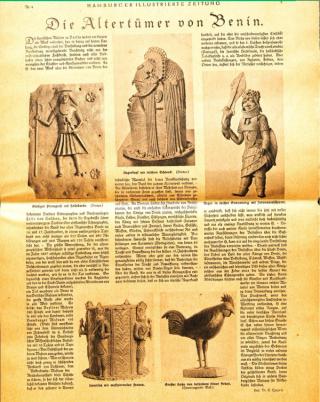
An archival document representing a Newspaper Clippings of 3 page(s)
Newspaper Clipping
MARKK Museum am Rothenbaum Kulturen und Künste der Welt
"Altertümer von Benin im Hamburgischen Museum für Völkerkunde - Teil II" von Prof. Dr. Hagen und andere Veröffentlichungen von Prof. Dr. Hagen
Date
January 25, 1920

Institution data

MARKK Museum am Rothenbaum Kulturen und Künste der Welt
The data was transferred directly by the institution.
Last updated: 2022-06-10
Languages: german, english
Institution fieldValue
Identifikationsnummer
object id
C 2338
Titel
designation
Altar der Hand (Ikegobo) einer Iyoba
Materialien
material
ANORGANISCH/Metall/Gelbguß
Heutiges Staatsgebiet des Herstellungsortes
production place
Afrika/Westafrika/Nigeria/Benin-Reich
Provenienz/Name
prior source
provenance
Erdmann
Provenienz Objektitinerar Akteure Orte Daten
provenance
Friedrich Erdmann
Provenienz/Affiliation
provenance
H. Bey & Co., Bey & Zimmer
Provenienz/Country
provenance
Germany
Provenienz/Date of Birth
provenance
23.10.1866
Provenienz/Date of Death
provenance
presumably 1907
Provenienz/First Name
provenance
Friedrich
Provenienz/No
provenance
10
Provenienz/Place of Birth
provenance
Altona (today Hamburg)
Provenienz/Place of Death
provenance
presumably South Africa
Provenienz/Profession
provenance
Merchant
Provenienz/Role-Function/0
provenance
Consignor
Provenienz/Role-Function/1
provenance
Collector
Provenienz/Sex
provenance
male
Provenienz/Short Biography
provenance
Friedrich Erdmann (1866-presumably 1907) was a merchant from Hamburg and worked as a managing director for the trading company Bey & Zimmer in Lagos, Warri and Sapele in southern Nigeria. Erdmann is known to have visited Benin City after it was conquered by British troops, taking the artefacts that remained there to sell with the permission of the British military, as well as photographing the area. Erdmann was one of the key figures in Bey’s Benin business, selling a total of 13 objects from the Kingdom of Benin to the museum in 1898. His widow, Alma, corresponded with Felix von Luschan (1854–1924) in Berlin, and later sold objects from her husband’s collection. His son Kurt (1901–1964) was an art historian; he also sold pieces from his father’s estate.
Provenienz/Street
provenance
Große Bäckerstraße 24
Provenienz/Town
provenance
Hamburg
Hersteller kulturhist. Herkunftsgesellschaft
ethnic attribution
--/Edo
Heutiger Aufbewahrungsort Sammlung
department and institution
Museum am Rothenbaum. Kulturen und Künste der Welt (MARKK)
Akquisitionsdatum
accession date
1898
Alte Inventarnummer
Inventurdatum
10.07.2009
Label Text (deu)
Altar der Hand Ikegobo einer Iyoba Unbekannte Werkstatt der Bronzegießergilde Igun Eronmwon / Königreich Benin, Nigeria, 17./18. Jh. / Gelbguss / Ankauf von Friedrich Erdmann, 1898, Inv. Nr. C 2338 Der Altar der Hand ist dem individuellen Erfolg seines Besitzers oder seiner Besitzerin gewidmet. Die Hand symbolisiert Errungenschaften im persönlichen Leben. Der Besitz dieser Altäre war ein Vorrecht hochrangiger Amtsinhaber und von Menschen, die etwas Großes geleistet hatten; also des Königs, der Königinmutter, der Würdenträger, Schmiede und Schnitzer, der Kriegshelden oder reicher Händler. Altäre aus Gelbguss waren dem König, der Königinmutter und dem Ezomo, einem hohen Heerführer, vorbehalten.
Label Text (eng)
Altar of the Hand of an Iyoba Ikegobo Unidentified workshop of the Bronze Casters Guild Igun Eronmwon / Benin Kingdom, Nigeria, 17th/18th century / Brass / Acquired from Friedrich Erdmann, 1898, Inv. no. C 2338 The Altar of the Hand is dedicated to the individual success of its owner. The hand symbolizes achievements in personal life. The possession of such altars was a prerogative of high-ranking titleholders and of those who had made great achievements, like the king, the queen mother, chiefs, blacksmiths and carvers, war heroes or rich merchants. Altars made of brass were reserved for the king, the queen mother and the Ezomo, a high army commander.
Maße
Höhe: 26,50 cm; Durchmesser: 17,00 cm
Sensitive Content

Digital Benin collates digital material from institutions, and some of this material is inherently colonial and contains words, terms and phrases that are inaccurate, derogatory and harmful towards African and African diasporic communities. Catalogue transcriptions, book titles, exhibition titles and museum titles may contain harmful terms. We recognise the potential for the material to cause physical and mental distress as well as evoke strong emotions. Owing to the scale of the collection’s data, a process to implement sensitive-content warnings in the displayed data is still incomplete. The material within the catalogue does not represent Digital Benin’s views. Digital Benin maintains a strong anti-colonial, anti-racist position and affirms its support for centring the humanity of historically marginalised and disenfranchised communities. Read more about the background of this statement here