




Iconographies



Provenance
Institution data
| Institution field | Value |
|---|---|
Identifikationsnummer object id | 2021.22:3 |
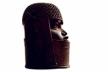
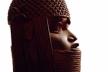
Titel designation | Gedenkkopf eines Königs |
Materialien material | ANORGANISCH/Metall/Gelbguß |
Heutiges Staatsgebiet des Herstellungsortes production place | Königtum Benin, Nigeria |
Provenienz/Name prior source provenance | Erdmann |
Provenienz Objektitinerar Akteure Orte Daten provenance | Museum für Kunst und Gewerbe Hamburg |
Provenienz/Affiliation provenance | H. Bey & Co., Bey & Zimmer |
Provenienz/Country provenance | Germany |
Provenienz/Date of Birth provenance | 23.10.1866 |
Provenienz/Date of Death provenance | presumably 1907 |
Provenienz/First Name provenance | Friedrich |
Provenienz/No provenance | |
Provenienz/Place of Birth provenance | Altona (today Hamburg) |
Provenienz/Place of Death provenance | presumably South Africa |
Provenienz/Profession provenance | Merchant |
Provenienz/Role-Function/0 provenance | Consignor |
Provenienz/Role-Function/1 provenance | Collector |
Provenienz/Sex provenance | male |
Provenienz/Short Biography provenance | Friedrich Erdmann (1866-presumably 1907) was a merchant from Hamburg and worked as a managing director for the trading company Bey & Zimmer in Lagos, Warri and Sapele in southern Nigeria. Erdmann is known to have visited Benin City after it was conquered by British troops, taking the artefacts that remained there to sell with the permission of the British military, as well as photographing the area. Erdmann was one of the key figures in Bey’s Benin business, selling a total of 13 objects from the Kingdom of Benin to the museum in 1898. His widow, Alma, corresponded with Felix von Luschan (1854–1924) in Berlin, and later sold objects from her husband’s collection. His son Kurt (1901–1964) was an art historian; he also sold pieces from his father’s estate. |
Provenienz/Street provenance | Große Bäckerstraße 24 |
Provenienz/Town provenance | Hamburg |
Hersteller kulturhist. Herkunftsgesellschaft ethnic attribution | |
Heutiger Aufbewahrungsort Sammlung department and institution | Museum am Rothenbaum. Kulturen und Künste der Welt (MARKK) |
Akquisitionsdatum accession date | 2021 |
Alte Inventarnummer | 1897.472 |
Inventurdatum | |
Label Text (deu) | Gedenkkopf eines Königs Unbekannte Werkstatt der Bronzegießergilde Igun Eronmwon / Königreich Benin, Nigeria 16. Jh. / Gelbguss / Übernahme vom Museum für Kunst und Gewerbe Hamburg, 2021, Inv. Nr. 2021.22:3 Der Königskopf hat eine besondere historische Bedeutung: Er wurde kurz nach der Zerstörung der Königsstadt Benin 1897 von Justus Brinckmann, dem damaligen Direktor des Hamburger Museums für Kunst und Gewerbe, gemeinsam mit drei weiteren als erste Benin-Werke im deutschsprachigen Raum erworben. Die Vorstellung des Kopfes bei einer Fachtagung in Lübeck im November 1897 löste euphorisches Interesse aus und markierte den Beginn der regen Sammeltätigkeit von deutschen Museen. |
Label Text (eng) | Commemorative Head of a King Unidentified workshop of the Bronze Casters Guild Igun Eronmwon / Benin Kingdom, Nigeria 16th century / Brass / Transfer from the Museum für Kunst und Gewerbe Hamburg, 2021, Inv. no. 2021.22:3 The king’s head has a special historical significance: acquired shortly after the destruction of the royal city of Benin in 1897 by Justus Brinckmann, then director of the Museum für Kunst und Gewerbe Hamburg, it became one of the first Benin acquisitions in the German-speaking countries, together with three other works. The presentation of the head at a conference in Lübeck in November 1897 triggered euphoric interest and marked the beginning of intense collecting activities by German museums. |
Maße | Höhe: 26,80 cm; Breite: 19,30 cm |
| Institution field | Value |
|---|---|
Inventarnummer object id | 1897.472 |
Titel designation | Kopf eines Oba (Königs) |
Beschreibung description | Kopftypus III, Untertyp II |
Beschreibung Veröffentlichung description | Der Gedenkkopf zeigt einen Herrscher des Volkes im westafrikanischen Benin. Er trägt eine Kinnumwicklung und eine Haube mit Behang, die realem Schmuck aus durchbohrtem Karneol nachgebildet sind. An der rechten Kopfseite hängt eine Haarflechte, darüber ein rosettenartiges vierteiliges Schmuckstück; an der linken Seite sind es zwei Zöpfe und Schmuckstücke desselben Typus. Halskragen und Zopfschmuck gehören zur Zeremonialtracht des Oba. Über den Augen befinden sich je drei Tätowierungsnarben. Auf dem Kopf befindet sich eine runde Öffnung. Jeder Oba errichtete seinem Vorgänger und seiner verstorbenen Königinmutter einen Altar, auf dem neben Kultgegenständen mindestens ein solcher Gedenkkopf aufgestellt war. In der mittleren Periode, der dieser Kopf zuzuordnen ist, ragten teilweise mit Schnitzereien, die historische Ereignisse zeigten, versehene Elefantenstoßzähne aus den Kopflöchern heraus. Die Provenienzforschung am MK&G zu den Benin- Bronzen führte im Jahr 2016 zur Erkenntnis, dass es sich um Raubkunst handelt. 2018 wurde in Absprache mit der Hamburger Behörde für Kultur und Medien beschlossen, die Benin- Bronzen an das Museum am Rothenbaum – Kulturen und Künste der Welt (MARKK) zu übergeben. Gemeinsam mit vielen weiteren Kunstwerken aus Benin sind sie Teil der aktuellen Rückgabeverhandlungen mit Nigeria, die dort koordiniert werden. |
Material material | Gelbguss, Eisen, Bronze |
Maße dimensions | Gesamt Höhe: 26,8 cm Durchmesser: 19,3 cm |
Gewicht weight | |
Objektbezeichnung object type | Plastik (Bildwerk) |
Anzahl object count | 1 |
Darstellung/Ikonographie iconography | Herrscherbildnis, Staatsporträt, Herrscher/Landesherr, Totenbildnis, Kopf, Gesicht |
Anzeige Datierung date made | frühes 17. Jahrhundert |
Datierung von date made | 1600 |
Anzeige Material/Technik production technique | Bronze, Eisen, gegossen |
Technik production technique | gegossen |
Ort production place | Benin |
Zugang von prior source | Erdmann, Friedrich, |
erworben durch prior source | Heye, Theodor |
Beteiligte provenance | |
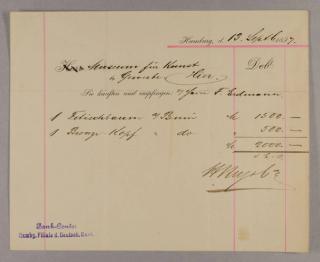
Provenienz provenance | Erdmann, Friedrich von: 1897 bis: 13.09.1897 (Erdmann war Mitarbeiter des Hamburger Handelshauses Bey & Co. und leitete deren Niederlassung in Lagos, Nigeria. 1897 und in den nachfolgen Jahren war er mehrfach in Benin-City. Dort hatte er den von einer britischen Strafexpedition geplünderten Königspalast fotografiert. Vor Ort aufgefundene Bronzen und andere Kultgegenstände wurden von Erdmann nach Deutschland verkauft. Bey&Co. war der Hauptimporteur von Benin-Bronzen nach Deutschland. Brinckmann hat diesen Kopf für 500 Mark erworben. Finanziert wurde der Ankauf durch den Commerzienrath Theodor Heye in Hamburg. ) |
Ereignis(se) event | Herstellung |
Zugangsdatum accession date | 13.09.1897 |
Zugangsart accession method | Ankauf |
Interne Bemerkung notes | |
Objektgeschichte exhibition history | |
Status display status | ausgeschieden |
Literatur bibliography | Museum für Kunst und Gewerbe Hamburg: Jahrbuch des Museums für Kunst und Gewerbe Hamburg, Hamburg, [Jahr] |
Werkrecht legal status | gemeinfrei |
URL weblink | https://sammlungonline.mkg-hamburg.de/de/object/Kopf-eines-Oba-K%C3%B6nigs/1897.472/dc00123526?s=Benin&h=0; https://sammlungonline.mkg-hamburg.de/de/object/Plastik-Kopf-eines-Oba-K%C3%B6nigs/P2017.3.9/mkg-e00170011?s=Benin&h=0; https://sammlungonline.mkg-hamburg.de/de/object/Plastik-Kopf-eines-Oba-K%C3%B6nigs/P2017.3.77/mkg-e00170250?s=Benin&h=0 |
Datierung bis | 1625 |
Epoche/Stil | (afrikanisch), (Benin) |
Freigabe Portal | freigegeben |
Relationen | abgebildet auf/in P2017.3.9, abgebildet auf/in P2017.3.77 |
Sachgruppe | Skulpturen, Plastiken |
Sammlung | Antike |
Standort (perm.) | (abgegeben an MARKK am 30.09.2021) |
Zugang Bemerkung | Per Rechnung vom 13.9.1897 wurde der Kopf von Friedrich Erdmann an Justus Brinckmann verkauft. Der Ankauf wurde von Commerzienrath Theodor Heye (1832-1916) finanziert. |
Digital Benin collates digital material from institutions, and some of this material is inherently colonial and contains words, terms and phrases that are inaccurate, derogatory and harmful towards African and African diasporic communities. Catalogue transcriptions, book titles, exhibition titles and museum titles may contain harmful terms. We recognise the potential for the material to cause physical and mental distress as well as evoke strong emotions. Owing to the scale of the collection’s data, a process to implement sensitive-content warnings in the displayed data is still incomplete. The material within the catalogue does not represent Digital Benin’s views. Digital Benin maintains a strong anti-colonial, anti-racist position and affirms its support for centring the humanity of historically marginalised and disenfranchised communities. Read more about the background of this statement here