
Iconographies




Provenance
Institution data
| Institution field | Value |
|---|---|
Object Number object id | 1979.206.96 |
Object Sort Number object id | 1979 206 96 |
Primary Rendition No object id | vs1979_206_96-d |
Title designation object type | Plaque: Snake |
Medium material | Bronze |
Dimensions dimensions | H. 18 1/2 × W. 12 3/16 in. (47 × 31 cm) |
Classification object type | Metal-Sculpture |
Date date made | 16th–17th century |
Geo: City production place | Court of Benin |
Geo: Country production place | Nigeria |
Credit Line prior source | The Michael C. Rockefeller Memorial Collection, Bequest of Nelson A. Rockefeller, 1979 |
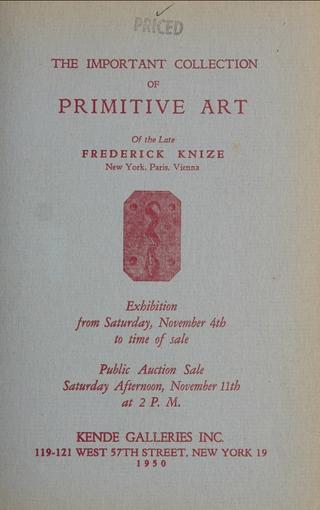
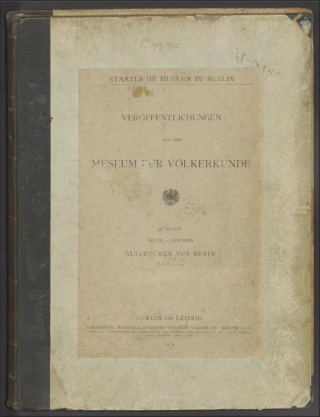
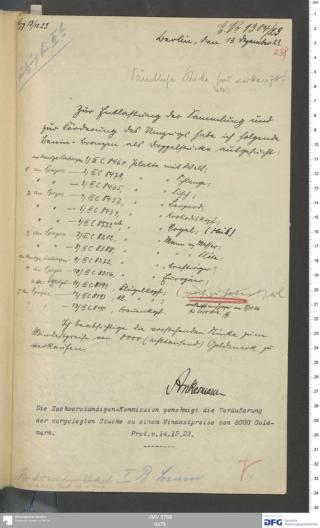
Provenance provenance | Court of Benin, taken from the Royal Palace in 1897 during the British military occupation of Benin; [H. Bey, Hamburg, Germany, by 1898]; Museum für Völkerkunde, Berlin (as III C 8479), deaccessionned 1923; [Arthur Speyer II, Berlin, 1923]; F. Knize, Vienna, Austria; Private Collection, New York, by 1951; (Parke-Bernet Gallery, New York, April 18, 1951, no. 233); Nelson R. Rockefeller, 1951, on loan to The Museum of Primitive Art, New York, 1958–1978 |
Dynasty reign associated name | Oranmiyan |
Culture ethnic attribution | Edo peoples |
ExhibitionHistory exhibition history | Primitive Sculpture from the Collection of Nelson A.Rockefeller Century Association, January 7, 1953–March 1,1953 Benin Bronzes Museum of Primitive Art, May 20, 1959–September 6,1959 Art Styles of the Papuan Gulf Museum of Primitive Art, February 14, 1961–May 5,1961 Art of Nigeria Memorial Art Gallery of the University of Rochester, December 11,1964–January 31, 1965 The World of Primitive Art Museum of Primitive Art, July 12, 1966–September 11,1966 Benin Museum of Fine Arts, Houston, September 21, 1968–November 24,1968 New Orleans Museum of Art, December 15, 1968–January 15,1969 Art of Oceania, Africa and the Americas from The Museum ofPrimitive Art The Metropolitan Museum of Art, May 10, 1969–August 17,1969 Sculpture of Black Africa : Nigeria &Cameroon The Metropolitan Museum of Art, June 23, 1971–March 19,1972 The Art of Nigeria and Cameroon South Huntington Public Library, New York, February 5, 1973–March30, 1973 |
Bibliography bibliography | The Metropolitan Museum of Art. Art of Oceania, Africa, and the Americas from the Museum of Primitive Art. New York: The Metropolitan Museum of Art, 1969, no. 362. |
Published References bibliography | von Luschan, F., Die Altertümer von Benin, 1919, p. 271 |
| Institution field | Value |
|---|---|
Is Highlight | False |
Is Timeline Work | False |
Is Public Domain license | True |
Object ID object id | 312300 |
Department department and institution | Arts of Africa, Oceania, and the Americas |
AccessionYear accession date | 1979 |
Object Name object type | Plaque |
Title designation | Plaque: Snake |
Culture ethnic attribution | Edo peoples |
Object Date date made | 16th–17th century |
Object Begin Date date made | 1500 |
Object End Date date made | 1700 |
Medium material | Bronze |
Dimensions dimensions | H. 18 1/2 × W. 12 3/16 in. (47 × 31 cm) |
Credit Line prior source | The Michael C. Rockefeller Memorial Collection, Bequest of Nelson A. Rockefeller, 1979 |
City | Court of Benin |
Country production place | Nigeria |
Classification object type | Metal-Sculpture |
Link Resource weblink | http://www.metmuseum.org/art/collection/search/312300 |
Repository department and institution | Metropolitan Museum of Art, New York, NY |
Tags iconography | Snakes |
Tags AAT URL iconography | http://vocab.getty.edu/page/aat/300250870 |
Tags Wikidata URL iconography | https://www.wikidata.org/wiki/Q2102 |
Digital Benin collates digital material from institutions, and some of this material is inherently colonial and contains words, terms and phrases that are inaccurate, derogatory and harmful towards African and African diasporic communities. Catalogue transcriptions, book titles, exhibition titles and museum titles may contain harmful terms. We recognise the potential for the material to cause physical and mental distress as well as evoke strong emotions. Owing to the scale of the collection’s data, a process to implement sensitive-content warnings in the displayed data is still incomplete. The material within the catalogue does not represent Digital Benin’s views. Digital Benin maintains a strong anti-colonial, anti-racist position and affirms its support for centring the humanity of historically marginalised and disenfranchised communities. Read more about the background of this statement here