

Iconographies


Provenance

Institution data
| Institution field | Value |
|---|---|
Inventory no. [ObjInventarNrS] object id | 13782 |
Object designation [ObjTitelOriginalS] designation object type | Altar stick |
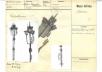
Description [ObjReserve02M] description | 13782. "Fetish tree". Above bird figure, wings and tail placed over figure of a chameleon. In addition, high bent regalia such as spear points, sickle knife, even, etc. Laterally below 2 more approaches, only with chameleon figures in spear- etc. Ring. Laterally each 1 chameleon on the support, 1 broken off. Middle section with 2 rings of clamps bent downward. Below cast yellow overlay with chameleon, snakes and crocodile figures. "Okpa-aru ... ist a bronze staff of unspecified age, though it is one of the few items of regalia thought to have been made by Ayegba. Associated with sacrifices made to the earth by an official called the Enefola, it further illustrates the link between the welfare of the Ata and the control of certain rituals by trusted aides and chiefs. To preserve its sanctity and efficacy, it is stored in the sacred shrine of the Ata's leading masquerade, ekwe ... claimed to have been founded by the Ayegba. Although okpa-aru may be owned by commoners, the Ata's is distinguished by its rich ornamentation. The shaft, decorated at intervals with rings and drooping petallike forms, separated in a trident-like configuration at the top. Each prong ends in a finial, the center finial being the most elaborate. Okpa-aru is particularly important during the festival of egwu Ayegba, which also features repeated performances of the ekwe masquerade. Stuck into the ground, it receives sacrificial food and dring to ensure the revitalization of king and kingdom. Because some of the food falls on the earth, the sourve of life, the peaceful celebration of this festival of hope is assured." (Dike zu moderner Form des Stabes. 76) PUBL Kat. Fetische p. 281, Abb. 101 LIT Ben Amos 1980: 52, und pl. 54 (Chicago, Field Museum) do. 1976: 248-250 Pitt-Rivers Cat. pl. XLIII, 330 Chike Dike: Regalia .. in Igala. African Arts XX, 3; 1987: 75f |
Mat./Technique [ObjTechMatM] material | Iron |
Dimensions [ObjMasse1S] dimensions | H 136 |
Dating [ObjDatierungS] date made | |
Year from [ObjJahrVonL] date made | |
Year until [ObjJahrBisL] date made | |
Geographical reference [ObjGeografieS] production place | Kingdom of Benin (Africa->West Africa->Nigeria) |
Name sorting [KueSortierungS_0] prior source | Kageneck, Gräfin von |
Name sorting [KueSortierungS_1] prior source | |
First Name 2 [KueVorNameS_1] provenance | |
First name [KueVorNameS_0] provenance | von |
Function collector 2 [OkuFunktionS_1] provenance | |
Function collector [OkuFunktionS_0] provenance | Collector |
Inventory note [ObjFeld07M] provenance | |
Last Name 2 [KueNameS_1] provenance | |
Last name [KueNameS_0] provenance | Kageneck, Gräfin |
Date of acquisition[ObjFeld04M] accession date | ca. 1910 |
Acquisition type [ObjFeld02M] accession method | |
Comemnts[ObjCreditlineM] notes | |
Exhibition exhibition history | |
Literature bibliography | |
Type [ObjSystematikS] | Rite/Cult |
Type of ownership [ObjFeld01M] | |
Type of person 2 [KueTypS_1] | |
Type of person [KueTypS_0] | Person |
| Institution field | Value |
|---|---|
Inventarnr. [ObjInventarNrS] object id | 13782 |
Beschreibung [ObjReserve02M] description | 13782. "Fetischbaum". Oben Vogelfigur, Flügel und Schwanz über Figur eines Chamäleons gelegt. Außerdem hochgebogene Regalien wie Speerspitzen, Sichelmesser, eben u.a. Seitlich darunter 2 weitere Ansätze, nur mit Chamäleon-Figuren in Speer- usw. Ring. Seitlich jeweils 1 Chamäleon auf dem Träger, 1 abgebrochen. Mittelteil mit 2 Ringen von nach unten gebogenen Schellen. Unten Gelbgußauflage mit Chamäleon, Schlangen und Krokodilfiguren "Okpa-aru ... ist a bronze staff of unspecified age, though it is one of the few items of regalia thought to have been made by Ayegba. Associated with sacrifices made to the earth by an official called the Enefola, it further illustrates the link between the welfare of the Ata and the control of certain rituals by trusted aides and chiefs. To preserve its sanctity and efficacy, it is stored in the sacred shrine of the Ata's leading masquerade, ekwe ... claimed to have been founded by the Ayegba. Although okpa-aru may be owned by commoners, the Ata's is distinguished by its rich ornamentation. The shaft, decorated at intervals with rings and drooping petallike forms, separated in a trident-like configuration at the top. Each prong ends in a finial, the center finial being the most elaborate. Okpa-aru is particularly important during the festival of egwu Ayegba, which also features repeated performances of the ekwe masquerade. Stuck into the ground, it receives sacrificial food and dring to ensure the revitalization of king and kingdom. Because some of the food falls on the earth, the sourve of life, the peaceful celebration of this festival of hope is assured." (Dike zu moderner Form des Stabes. 76) PUBL Kat. Fetische p. 281, Abb. 101 LIT Ben Amos 1980: 52, und pl. 54 (Chicago, Field Museum) do. 1976: 248-250 Pitt-Rivers Cat. pl. XLIII, 330 Chike Dike: Regalia .. in Igala. African Arts XX, 3; 1987: 75f |
Mat./Technik [ObjTechMatM] material production technique | Eisen |
Maßangaben [ObjMasse1S] dimensions | H 136 |
Gattung [ObjSystematikS] object type | Ritus/Kult |
Objektbezeichnung [ObjTitelOriginalS] object type | Altarstab |
Datierung [ObjDatierungS] date made | |
Jahr bis [ObjJahrBisL] date made | |
Jahr von [ObjJahrVonL] date made | |
Geogr. Bezug [ObjGeografieS] production place | Königtum Benin (Afrika->Westafrika->Nigeria) |
Nachname 2 [KueNameS_1] prior source | |
Nachname [KueNameS_0] prior source | Kageneck, Gräfin |
Namensortierung [KueSortierungS_0] prior source | Kageneck, Gräfin von |
Namenssortierung [KueSortierungS_1] prior source | |
Vorname 2 [KueVorNameS_1] prior source | |
Vorname [KueVorNameS_0] prior source | von |
Funktion Sammler 2 [OkuFunktionS_1] prior source role | |
Funktion Sammler [OkuFunktionS_0] prior source role | Sammler |
Erwerbsdatum [ObjFeld04M] accession date | ca. 1910 |
Besitzart [ObjFeld01M] accession method | |
Erwerbungsart [ObjFeld02M] accession method | |
Bemerkungen [ObjCreditlineM] notes | |
Inventar Notiz [ObjFeld07M] notes | |
Ausstellung exhibition history | |
Literatur bibliography | |
Personentyp 2 [KueTypS_1] | |
Personentyp [KueTypS_0] | Person |
Digital Benin collates digital material from institutions, and some of this material is inherently colonial and contains words, terms and phrases that are inaccurate, derogatory and harmful towards African and African diasporic communities. Catalogue transcriptions, book titles, exhibition titles and museum titles may contain harmful terms. We recognise the potential for the material to cause physical and mental distress as well as evoke strong emotions. Owing to the scale of the collection’s data, a process to implement sensitive-content warnings in the displayed data is still incomplete. The material within the catalogue does not represent Digital Benin’s views. Digital Benin maintains a strong anti-colonial, anti-racist position and affirms its support for centring the humanity of historically marginalised and disenfranchised communities. Read more about the background of this statement here