

Iconographies



Provenance
Institution data
| Institution field | Value |
|---|---|
Inventory no. [ObjInventarNrS] object id | 1157 |
Object designation [ObjTitelOriginalS] designation object type | Ancestor head |
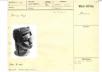
Description [ObjReserve02M] description | 01157. So-called Udo head. Decorative scars, neck rings, row hairstyle. Rectangular hole in the neck. Dust patina. Casting defect on the right side. 1 braid old broken loose. "... Is a provincial style kope.... A head like this, along with several figures, comes from the small town of Udo, about 65 km from Benin. There are several such heads that we consider to belong to the Udo style, and since we cannot be more precise, we assume that the pieces were made there. Since they copy Early Period heads, they were felt to be of that period; but thermoluminescence data from two of these heads place them in the late 16th century-in other words, in the early part of the Middle Period (Willett 50) Inscription to Fig. 77: "16th/17th c. ... Udo sought to compete with Benin and this piece - along with 13 others - gives the Udo version of the commemorative heads ... again. ... The distinctly provincial Udo works reveal a vitality that those who copy them lack." PUBL Luschan v. 1919: Altertümer von Benin. I, 268, Tfl. 57, 58 Vatter Ernst. 1926: Religiöse Plastik der Naturvölker. Ffm. Abb. 96 und p. 187 Rachewiltz. Boris. 1960: Afrikanische Kunst. Abb. 14 LIT Kat Pitt Rivers 1976 pl XXIV, 149/50 - head of a girl Dark 1982: ill 4 Willett/Eyo. 1980: Kunstschätze aus Alt-Nigeria. Mainz |
Mat./Technique [ObjTechMatM] material | Yellow cast iron; brass with approximately equal amounts of tin, lead and zinc in the lower concentration range and elevated trace element concentrations. |
Dimensions [ObjMasse1S] dimensions | H 21.5 |
Dating [ObjDatierungS] date made | |
Year from [ObjJahrVonL] date made | |
Year until [ObjJahrBisL] date made | |
Geographical reference [ObjGeografieS] production place | Kingdom of Benin (Africa->West Africa->Nigeria) |
Name sorting [KueSortierungS_0] prior source | no entry |
Name sorting [KueSortierungS_1] prior source | |
First Name 2 [KueVorNameS_1] provenance | |
First name [KueVorNameS_0] provenance | |
Function collector 2 [OkuFunktionS_1] provenance | |
Function collector [OkuFunktionS_0] provenance | |
Inventory note [ObjFeld07M] provenance | |
Last Name 2 [KueNameS_1] provenance | |
Last name [KueNameS_0] provenance | no entry |
Date of acquisition[ObjFeld04M] accession date | |
Acquisition type [ObjFeld02M] accession method | |
Comemnts[ObjCreditlineM] notes | Supplement data. Collector. Color drawing Kraus. |
Exhibition exhibition history | |
Literature bibliography | |
Type [ObjSystematikS] | Rite/Cult |
Type of ownership [ObjFeld01M] | |
Type of person 2 [KueTypS_1] | |
Type of person [KueTypS_0] | Person |
| Institution field | Value |
|---|---|
Inventarnr. [ObjInventarNrS] object id | 1157 |
Beschreibung [ObjReserve02M] description | 01157. Sogenannter Udo-Kopf. Schmucknarben, Halsringe, Reihenfrisur. Rechteckiges Loch im Nacken. Staubpatina. Gußfehler rechts seitlich. 1 Zopf alt losgebrochen. "... ist eine Kope im Provinzialstil... Ein Kopf wie dieser stammt zusammen mit einigen Figuren aus der kleinen Stadt Udo, etwa 65 km von Benin entfernt. Es gibt verschiedene solcher Köpfe, die wir als zum Udo-Stil gehörend bezeichnen, und da wir keine präzisere Aussage machen können, nehmen wir an, daß die Stücke dort entstanden sind. Da sie Köpfe der Frühen Periode kopieren, wurden sie als aus dieser Zeit stammend empfunden; aber Thermoluminiszenz-Daten zweier dieser Köpfe weisen sie in das späte 16. Jh. - mit anderen Worten in die Frühzeit der mittleren Periode." (Willett 50) Beschriftung zu Abb. 77: "16./17. Jh. ... Udo suchte mit Benin zu wetteifern und dieses Stück gibt - zusammen mit 13 anderen - die Udo-Version der Gedenkköpfe ... wieder. ... Die deutlich provinziell wirkenden Udo-Werke offenbaren eine Vitalität, die denen, die sie kopieren, fehlt." PUBL Luschan v. 1919: Altertümer von Benin. I, 268, Tfl. 57, 58 Vatter Ernst. 1926: Religiöse Plastik der Naturvölker. Ffm. Abb. 96 und p. 187 Rachewiltz. Boris. 1960: Afrikanische Kunst. Abb. 14 LIT Kat Pitt Rivers 1976 pl XXIV, 149/50 - head of a girl Dark 1982: ill 4 Willett/Eyo. 1980: Kunstschätze aus Alt-Nigeria. Mainz |
Mat./Technik [ObjTechMatM] material production technique | Messing mit etwa gleichen Anteilen an Zinn, Blei und Zink im unteren Konzentrationsbereich und erhöhten SpurenelementkonzentrationenGelbguß; Messing mit hohem Zinkgehalt, sehr geringem Zinngehalt, leicht erhöhtem Bleigehalt Gelbguß |
Maßangaben [ObjMasse1S] dimensions | H 21.5 |
Gattung [ObjSystematikS] object type | Ritus/Kult |
Objektbezeichnung [ObjTitelOriginalS] object type | Ahnenkopf |
Datierung [ObjDatierungS] date made | |
Jahr bis [ObjJahrBisL] date made | |
Jahr von [ObjJahrVonL] date made | |
Geogr. Bezug [ObjGeografieS] production place | Königtum Benin (Afrika->Westafrika->Nigeria) |
Nachname 2 [KueNameS_1] prior source | |
Nachname [KueNameS_0] prior source | kein Eintrag |
Namensortierung [KueSortierungS_0] prior source | kein Eintrag |
Namenssortierung [KueSortierungS_1] prior source | |
Vorname 2 [KueVorNameS_1] prior source | |
Vorname [KueVorNameS_0] prior source | |
Funktion Sammler 2 [OkuFunktionS_1] prior source role | |
Funktion Sammler [OkuFunktionS_0] prior source role | |
Erwerbsdatum [ObjFeld04M] accession date | |
Besitzart [ObjFeld01M] accession method | |
Erwerbungsart [ObjFeld02M] accession method | |
Bemerkungen [ObjCreditlineM] notes | Angaben ergänzen. Sammler. Farbzeichnung Kraus. |
Inventar Notiz [ObjFeld07M] notes | |
Ausstellung exhibition history | |
Literatur bibliography | |
Personentyp 2 [KueTypS_1] | |
Personentyp [KueTypS_0] | Person |
Digital Benin collates digital material from institutions, and some of this material is inherently colonial and contains words, terms and phrases that are inaccurate, derogatory and harmful towards African and African diasporic communities. Catalogue transcriptions, book titles, exhibition titles and museum titles may contain harmful terms. We recognise the potential for the material to cause physical and mental distress as well as evoke strong emotions. Owing to the scale of the collection’s data, a process to implement sensitive-content warnings in the displayed data is still incomplete. The material within the catalogue does not represent Digital Benin’s views. Digital Benin maintains a strong anti-colonial, anti-racist position and affirms its support for centring the humanity of historically marginalised and disenfranchised communities. Read more about the background of this statement here